Ghana· Africa
Nov 24 – Nov 25, 2026
A month of ritual ban gives way to the sprinkling of kpokpoi for the ancestors, drumming and homecoming across the Ga towns.
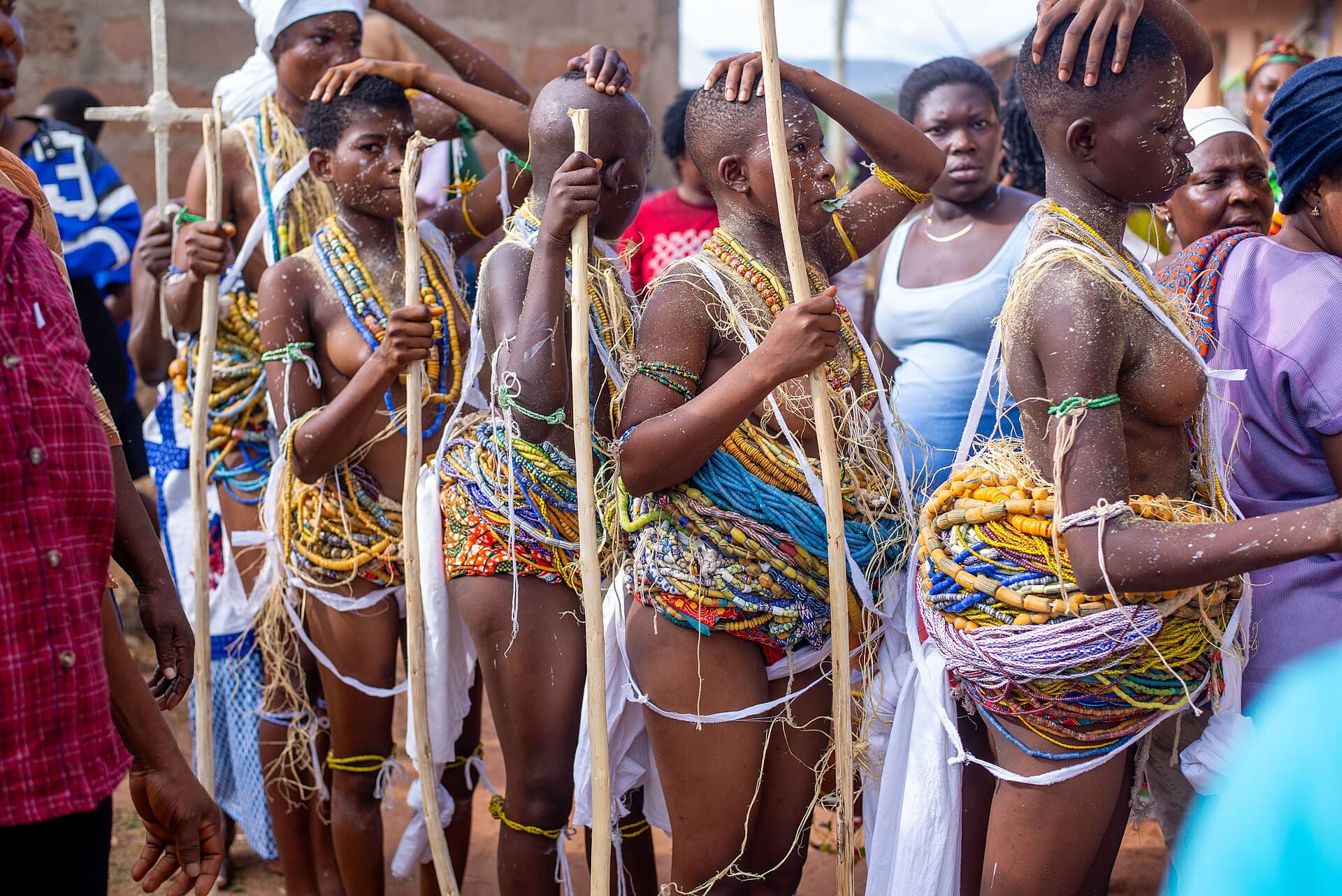
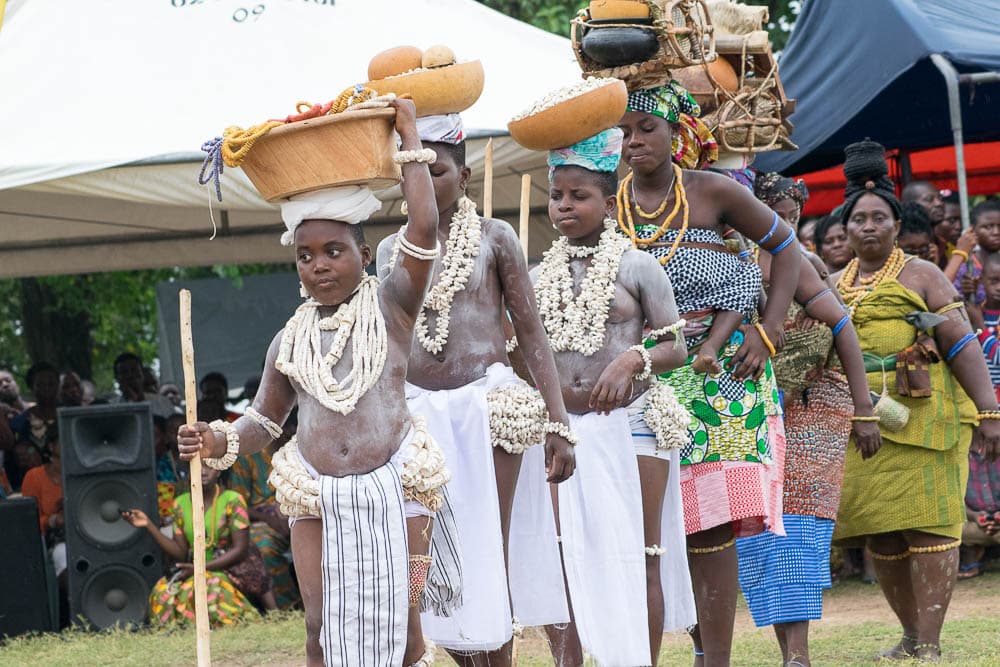
Homowo unfolds over weeks across the Ga towns of Accra — Ga Mashie, Teshie, Nungua, La, Osu and others — each keeping its own timing under the Ga Mantse and its priests. It opens with the planting of the first crops and a period of ritual quiet: a ban on drumming and noise-making is imposed so as not to disturb the gods and the ripening fields, a prohibition the traditional authorities enforce. As the harvest comes in, the ban lifts and the celebration breaks out. The festival's signature act is the sprinkling of kpokpoi — a steamed, fermented cornmeal dish eaten with palm-nut soup — by the chiefs and elders through the streets and at family thresholds, fed to the ancestors and the gods in thanks and to bless the town. There are rites for twins and triplets, who hold a special place in Ga belief; processions of chiefs in palanquins; the noisy, joyful Ga drumming and kpanlogo dance; and the homecoming, when Ga families scattered across Ghana and the diaspora return to their home towns to eat kpokpoi together and remember the dead. The famine the festival recalls is folded into a wider thanksgiving for survival and harvest. Homowo is the Ga assertion of identity in a fast-growing capital, and a yearly knitting-together of family, town and ancestors that the spread of the city has not loosened.
Drawn up by the host community. Please read in full before requesting an invitation.
Open. The street celebrations, kpokpoi sprinkling and durbars across the Ga towns are public; a local host helps you find the right town and day, as timing varies by community. Reached within Greater Accra.
Smart-casual, modest clothing; covering shoulders and knees for the chiefly durbars. Ga and Ghanaian cloth is welcome.
Photography of the public celebrations is generally welcomed. Ask before close portraits, show deference around the chiefs and priests during the kpokpoi rite, and follow any guidance at the palanquin processions.
Respect the drumming ban where it is in force — keep quiet in towns observing it. Show deference to chiefs and elders, don't interrupt the sprinkling of kpokpoi, and accept hospitality graciously if a family invites you to share food.
Ga; English is Ghana's official language and widely spoken in Accra.
Warm, humid coastal conditions in busy streets; manage sun and water. Malaria-endemic — take prophylaxis and repellent. Otherwise undemanding.
Coastal Accra in the August/September season is warm, humid and can be wet: light clothing, a hat, sunscreen, water and a light rain layer. Ghana cedis in cash for food and transport. Modest, smart-casual dress is read as respect at the chiefly events. Comfortable shoes for moving between street events.
Depending on the day and the town, you may find the hush of the drum ban, a procession of chiefs borne high in palanquins under umbrellas, or the streets full of kpanlogo drumming and dance. The set-piece is the sprinkling of kpokpoi — elders moving through the town scattering the cornmeal at doorways and shrines, fed to the ancestors. Around it are family reunions, food and music. It is warm, loud and communal, and which moment you witness depends on which Ga town and which day you come.
The harvest homecoming that hoots at hunger