Ghana· Africa
Sep 6 – Sep 7, 2026
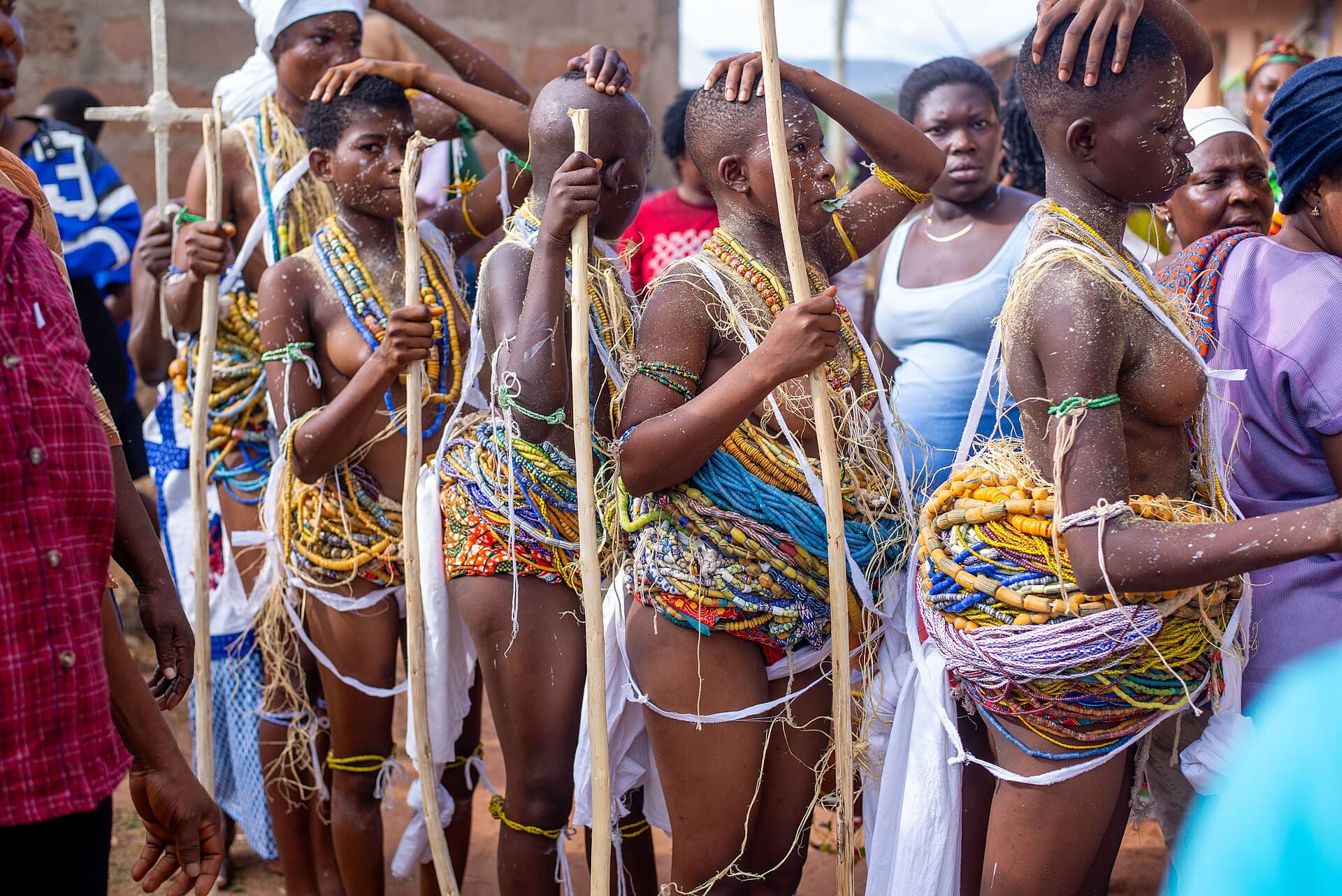
After days of seclusion and instruction, the Krobo initiates are presented to the community in beads and ritual dress.
Dipo is the Krobo rite that carries a young woman from girlhood into womanhood, held over several days in the dry season, usually between March and May, in the Krobo towns of the Eastern Region. The initiates — traditionally girls in their teens — are taken into the care of the ritual mothers and the priests of Nene Kloweki for a period of seclusion, cleansing and instruction in the skills, conduct and knowledge expected of a Krobo woman. The rite's pivotal and most sacred act, in which an initiate is placed upon a sacred stone (the tekpete) to confirm her status, is closed: it is conducted by the priests away from outsiders and is not open to spectators or cameras. The rite's public face is the outdooring on the final day, when the young women are presented to the community arrayed in the Krobo's celebrated old glass beads — heirloom strands worn at the neck, wrist and waist — and in ritual cloth, dancing and receiving the recognition of the town as women now. The outdooring is a celebration that welcomes visitors, and it has drawn growing numbers of them. That visibility carries a real history the catalogue keeps in view: the rite, and especially its young initiates, have been photographed and written about by outsiders without consent, and the practice has been the subject of debate within Ghana over the age of initiates and the place of the custom in modern life. A respectful witness attends the public outdooring, follows the community's lead, and does not seek out the closed sacred rite or treat the initiates as subjects for the camera.
Rédigées par la communauté hôte. Merci de les lire en entier avant de demander une invitation.
Witnessed — the public outdooring only. The days of seclusion and the sacred-stone rite are closed to outsiders. Attend the final-day celebration through a Krobo host who arranges access and conveys the community's conditions.
Modest clothing covering shoulders and knees. Visitors dress plainly; the beads and ritual cloth belong to the initiates.
Restricted and consent-led. The sacred-stone rite is closed to all photography. At the outdooring, ask before any photograph and especially before close images of the initiates, who are young women at a vulnerable threshold; accept refusal, and never photograph the closed rites. The history of non-consensual images of Dipo is exactly why this matters.
Attend only the public outdooring, keep back from the initiates and the priests, and do not seek out the closed seclusion or stone rite. Take direction from the ritual mothers and your host, and treat the initiates as people, not photographic subjects.
Dangme (Krobo) and English.
Hot, increasingly humid dry-season days outdoors with limited shade; manage sun and water. Malaria-endemic region — take prophylaxis and repellent. Carry personal medication.
Dry-season Eastern Region heat: light modest clothing, a hat, sunscreen and water. Sturdy shoes for dusty town ground. Ghana cedis in cash, including for any photography permission arranged through your host. Above all, restraint with the camera and deference to the ritual mothers and priests.
What a visitor sees is the outdooring: the young women brought out before the town, dressed in strands of old Krobo glass beads and ritual cloth, dancing and presented as women to the drumming and the gathered community, with the priests and ritual mothers presiding. It is celebratory and proud, full of beadwork, drumming and family. The earlier days of seclusion and the sacred-stone rite happen away from outsiders and are not for viewing. You watch the public celebration with a local host, keeping back from the initiates and the priests.
The Krobo passage from girlhood to womanhood