Ghana· Africa
Sep 6 – Sep 7, 2026
The Anlo Ewe remember a backwards walk out of a tyrant's walled city, in drumming, Agbadza, and a grand durbar.
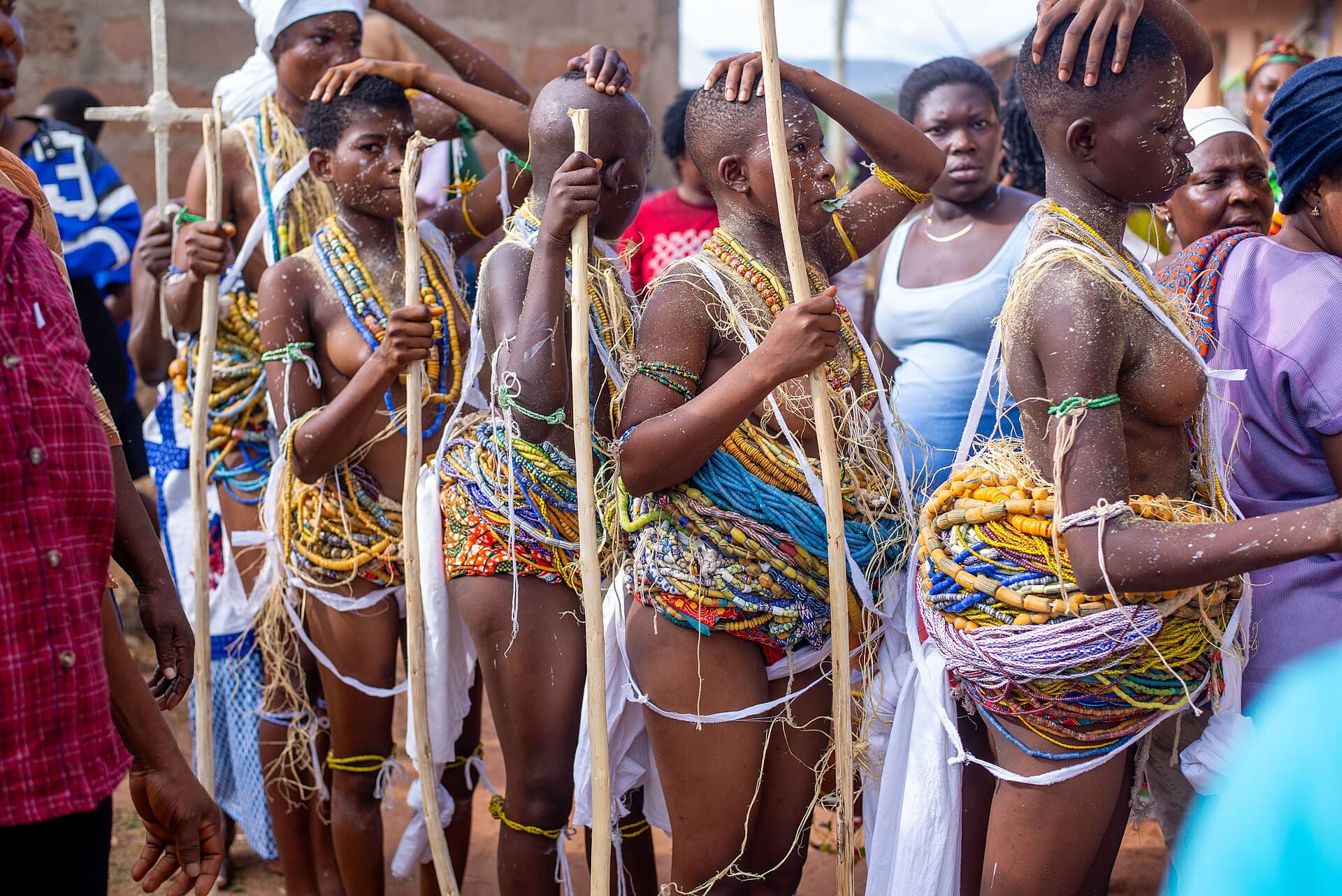
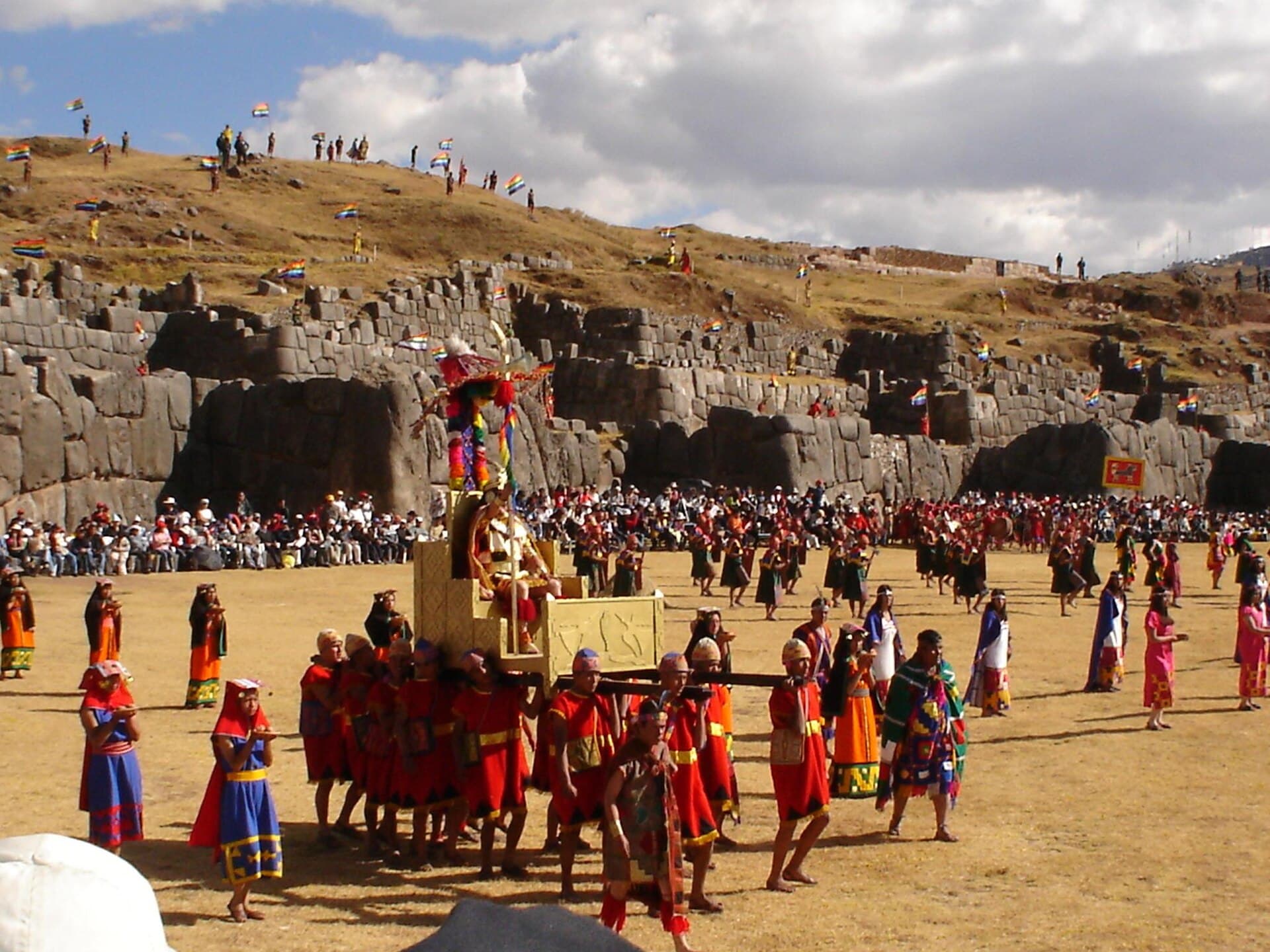
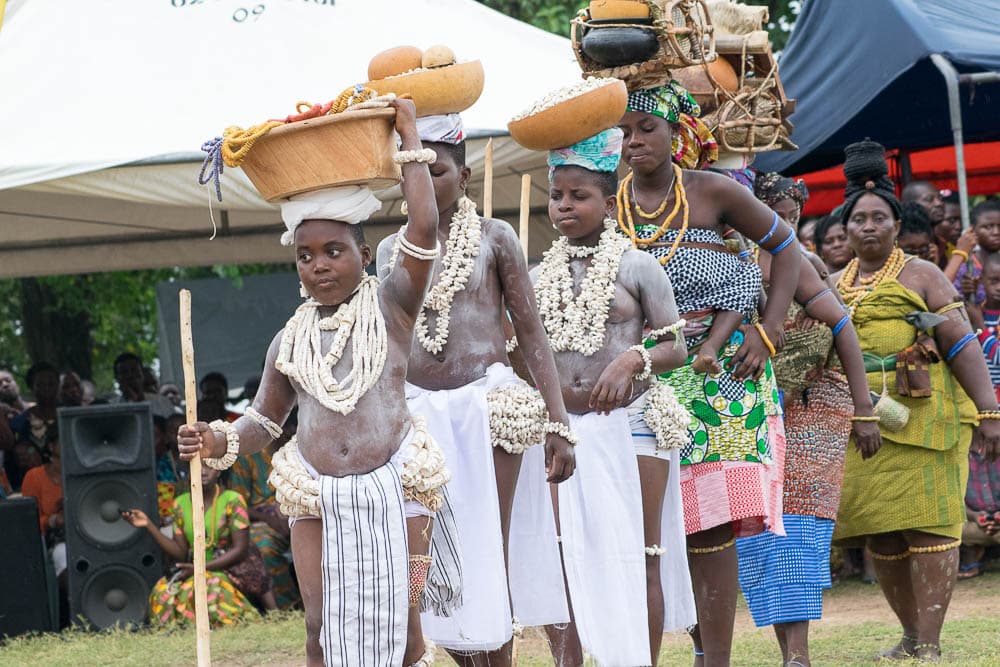
Hogbetsotso Za is held on the first Saturday of November at Anloga, the customary and ritual capital of the Anlo state on Ghana's eastern coast. The festival commemorates the migration of the Anlo Ewe from Notsie, where, the tradition holds, they escaped the tyrant Torgbui Agokoli by weakening the city wall with waste water and walking out backwards in the dark so their tracks pointed inward. The weeks before the festival carry ritual preparation — a period of peace-making and the ceremonial cleansing of the state, including rites at the lagoon and the settling of disputes, so the community comes to the day reconciled. The festival proper centres on a grand durbar: the Awoamefia, the paramount chief of the Anlo, processes to the durbar ground borne in a palanquin under the talking of the atumpan drums, with the sub-chiefs in full regalia, and sits in state to receive homage. Agbadza, the Ewe war-dance turned celebration, is danced through the day, its drumming and the bent-forward, wing-beating movement instantly recognisable. The festival gathers the Anlo from across Ghana and the diaspora back to Anloga, renews the authority of the traditional state, and re-tells the founding story that binds a coastal people to a journey out of bondage. It is a homecoming and a re-enactment of survival as much as a celebration.
Drawn up by the host community. Please read in full before requesting an invitation.
Witnessed. The public festival and durbar are open to respectful visitors; Anloga is reached via Keta in the Volta Region. The chiefly and ritual elements have their own protocol — follow local guidance.
Smart, modest clothing for a chiefly occasion; covering shoulders and knees. Bright traditional cloth is welcome. Avoid anything scruffy at the durbar.
Photography is generally welcomed at the public festival and durbar. Show deference around the Awoamefia and chiefs — follow the marshals, and ask before close portraits of elders.
Show respect to the chiefs and the Awoamefia: stand when the procession passes, don't point your feet at or turn your back rudely on the chiefly party, and keep clear of the palanquin route. Greet elders courteously and follow the marshals.
Ewe; English is Ghana's official language and widely spoken.
Long hours in coastal heat and humidity with little shade; manage sun, water and salts. Malaria-endemic region — take prophylaxis and repellent. Otherwise undemanding.
Coastal Volta heat and humidity: light clothing, a hat, sunscreen and water. The durbar runs for hours in the sun — a folding stool and shade help. Bring Ghana cedis in cash. Dress smart-modest as a mark of respect at a chiefly occasion.
The day builds toward the durbar: the ground fills with drumming groups and Agbadza dancers, the bent-double dance with arms beating like wings, before the chiefs arrive in procession. The Awoamefia comes high in a palanquin beneath umbrellas, the atumpan drums 'speaking' his praises, the sub-chiefs in kente and gold. There is colour, heavy drumming, oratory and homage. Around the formal durbar the town is full of family reunions and music. You watch the durbar from the public areas and follow the marshals around the chiefs' procession.
The homecoming that remembers a walk backwards out of tyranny