Peru· Americas
Jul 11 – Jul 12, 2026
Four hundred years of Arctic market — reindeer, craft and joik — in February cold above the Circle.
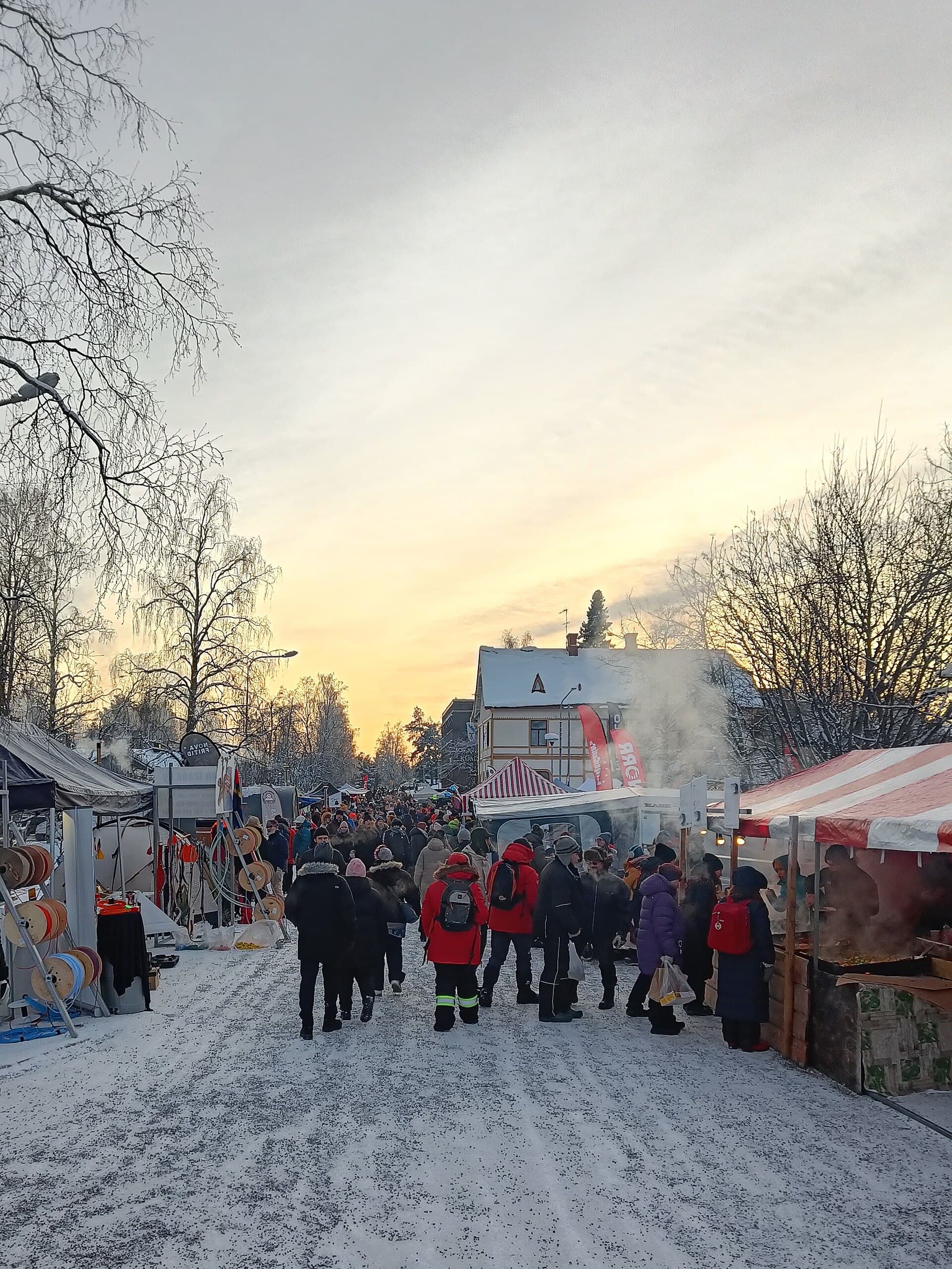
The Jokkmokk Winter Market has been held on the first Thursday-to-Saturday of February since 1605, drawing tens of thousands to a town of a few thousand in the deep Arctic winter, where temperatures can fall far below freezing. There are two interwoven things here, and the catalogue keeps them distinct. The market itself is a sprawling commercial fair — hundreds of stalls of food, furs, knives, textiles, and goods both Sámi and not — descended from the historic trading meet, with a reindeer caravan and reindeer-racing on the frozen lake among its set-pieces. Around and alongside it run the Sámi cultural days, the part that makes Jokkmokk more than a cold bazaar: exhibitions of Sámi duodji craft, joik (the distinctive Sámi vocal tradition), Sámi-language events, film, seminars on herding and land rights, church services in Sámi, and the gathering of the herding families themselves. Jokkmokk is home to Ájtte, the Swedish mountain and Sámi museum, which anchors the cultural programme. For the Sámi the market is a yearly reunion and a public stage for a culture that the Swedish state long worked to assimilate, and the cultural days are where contemporary Sámi life — its art, politics and language — is asserted rather than sold. A visitor can enjoy the market as a market, but the deeper invitation is to the cultural days, where Sámi voices speak for themselves.
Drawn up by the host community. Please read in full before requesting an invitation.
Open. The market is free and public; some cultural-days events and the Ájtte museum may charge or need booking. Jokkmokk is reached via Luleå; arrange transport and lodging well ahead in the busy market week.
No code beyond dressing for severe Arctic cold. The Sámi gákti (traditional dress) is worn by Sámi participants; visitors do not wear it.
Photography at the market is fine. At Sámi cultural events, ceremonies and around individuals in gákti, ask first — the gákti and joik are personal and cultural, not props — and follow any guidance at the cultural-days events.
Engage the market as a market and the cultural days as the Sámi community's own stage — listen more than you photograph, buy genuine duodji from Sámi makers, and don't treat people in traditional dress as a backdrop. Respect the line between commerce and culture.
Swedish and the Sámi languages; English is widely understood.
Severe Arctic cold is the real hazard — frostbite and slips on ice are the risks; dress fully, cover extremities, and move indoors to warm regularly. Short daylight hours.
This is the Arctic in February, frequently far below freezing: genuine cold-weather kit is essential — insulated layers, a windproof outer, a warm hat, insulated gloves, thick socks and properly warm, grippy winter boots, plus hand and toe warmers. Daylight is short. Book lodging far ahead, as beds for hundreds of kilometres fill. Swedish krona (cards are widely taken too).
The town is packed and freezing, the streets lined with stalls steaming with food, furs and craft, and out on the frozen lake the reindeer caravan and racing draw crowds in the blue Arctic light. Threaded through it are the cultural-days events — a joik performance, a duodji exhibition, a talk on reindeer herding, the galleries of the Ájtte museum. The contrast is the point: a tourist market wrapped around a living culture speaking for itself. Dress for serious cold and move between the commerce and the cultural programme.
A four-century Arctic market and the Sámi cultural days around it