Peru· Americas
Jul 11 – Jul 12, 2026
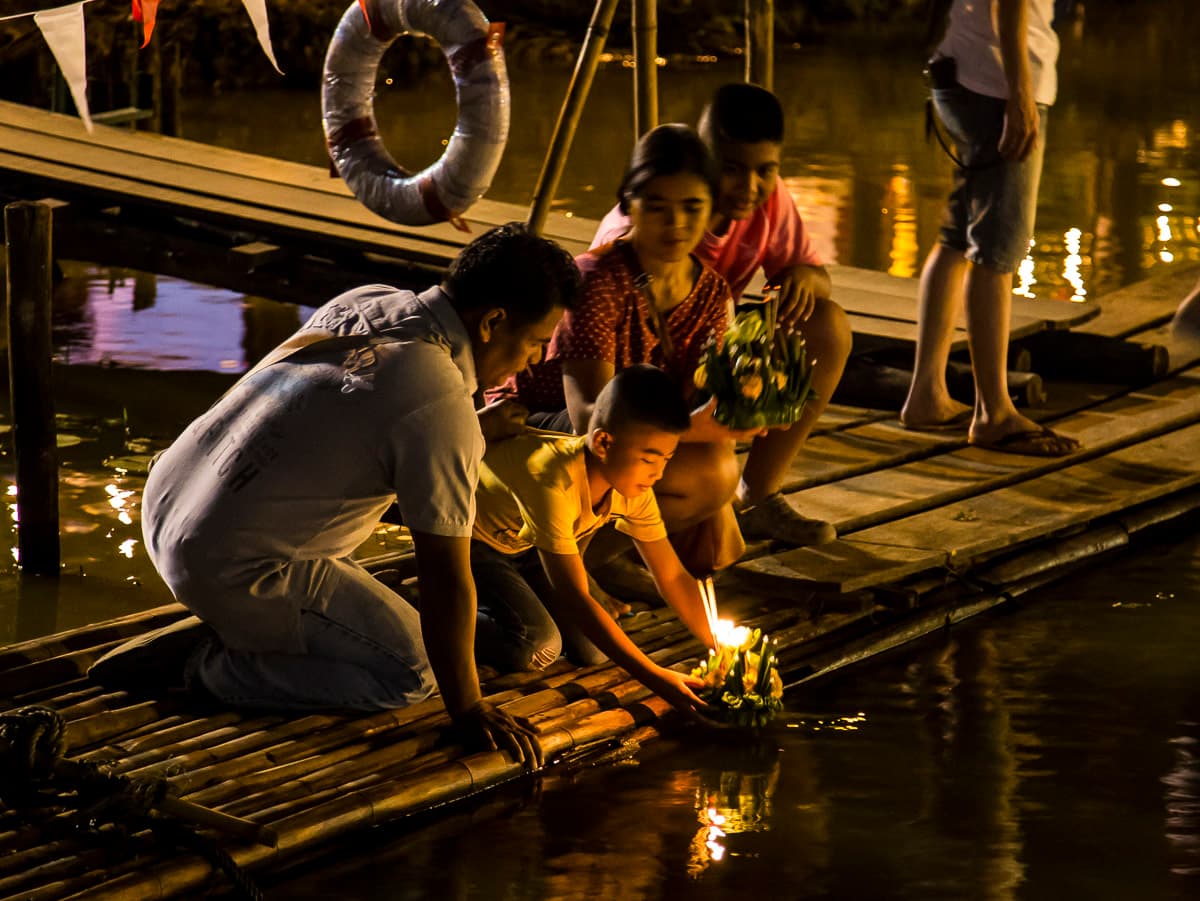
Candle-lit floats drift down the Ping and lantern light rises over Chiang Mai on the twelfth full moon.
On the full moon of the twelfth lunar month, Chiang Mai holds the two festivals together. For Loy Krathong, people make or buy a krathong — a small float, traditionally of banana leaves and trunk, dressed with flowers, candles and incense, often with a clipping of hair or nail and a coin — and set it adrift on the Ping river and the city's waterways after dark, giving thanks to Phra Mae Khongkha, the goddess of water, asking pardon for the year's use and pollution of it, and floating away misfortune and ill feeling. For Yi Peng, the Lanna festival particular to the north, the khom loi — a paper hot-air lantern — is lit and released into the night sky carrying a wish or a worry let go, and the homes and temples are hung with lanterns and the krathong-style decorations. The two together fill Chiang Mai with light on water and light in the air, and the old city's temples hold processions, candlelit chanting and merit-making through the nights. Beyond the photographs the festivals are devotional acts of thanksgiving and release, rooted in Buddhist merit and in reverence for water. They are also the most visited entries in this catalogue, and that brings real friction: vast crowds, commercialised mass-release events sold to tourists, and a genuine hazard from sky lanterns — which are now banned within Chiang Mai's city limits and near the airport for fire and aviation safety, and may legally be released only at authorised venues outside the centre. The deeper experience is the local temple-and-river observance, not the staged mass release.
Drawn up by the host community. Please read in full before requesting an invitation.
Open. The river and temple observances are free and public; the large Yi Peng mass-lantern releases are ticketed events at authorised venues outside the city. Sky-lantern release is restricted by law within Chiang Mai — release only where permitted.
Modest clothing covering shoulders and knees for the temples; light and practical for warm crowded evenings.
Photography is welcomed. At the temples be quiet and unobtrusive around people making merit, avoid flash during chanting, and ask before close portraits of monks and worshippers.
Use a biodegradable krathong and don't litter the waterways; never release a sky lantern where it is banned (city centre, near the airport) — the fire and aviation risk is real. Be quiet and respectful at the temples, and don't crowd people at their devotions.
Thai (and northern Kham Muang); English in Chiang Mai's tourism.
Warm evenings, dense crowds near water and open flame; mind footing at the riverbanks and care with candles and lanterns. Low physical demand otherwise.
November in Chiang Mai is warm and mostly dry: light clothing, with a light layer for the evening. You will be near water and candles after dark in crowds — sensible shoes and care with flame. Thai baht in cash for a krathong (buy a biodegradable one) and offerings. If you want a sky-lantern release, book a legitimate authorised venue rather than releasing in the city.
After dark the riverbanks and the moat fill with people crouching to launch their krathong — a slow drift of hundreds of candle flames on the black water — while around the temples there is chanting, incense and lantern light. If you join an authorised Yi Peng release outside the centre, the sky fills with rising points of light. The old-city temples are the quieter, deeper heart of it. It is beautiful and very crowded; the most meaningful version is the neighbourhood-and-temple observance rather than the ticketed spectacle.
Floating the year's misfortune away by water and by sky