Peru· Americas
Jul 11 – Jul 12, 2026
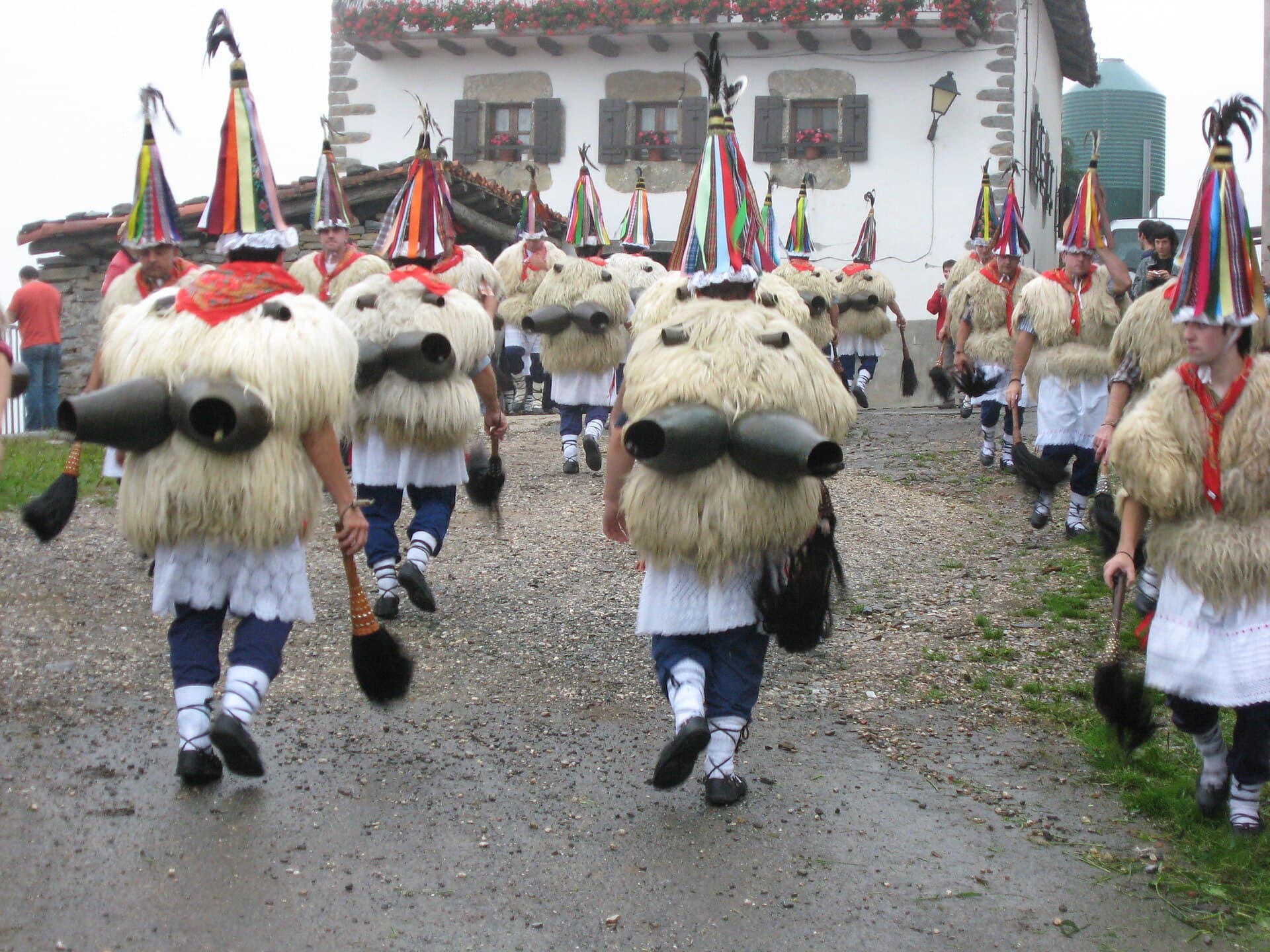
Men in sheepskins and conical caps walk between two villages, cowbells swinging in step to wake the earth.
The Joaldunak carnival falls on the Monday and Tuesday following the last Sunday of January. On the Monday the bell-bearers of Zubieta set out and walk the 3 km to Ituren; halfway they are met by the men of Ituren's Aurtitz quarter, and the joined column — forty or fifty Joaldunak carrying between eighty and a hundred bells — processes through Ituren to the square, where a communal meal seals the brotherhood of the two villages. On the Tuesday, Ituren returns the visit to Zubieta. The costume is precise and unvarying: a blue or white shirt, a lace petticoat, a sheepskin over the shoulders, a coloured neckerchief, a conical cap topped with ribbons, a horsehair switch in the hand, and strapped to the lower back two large ttunttun cowbells. The gait is the rite — a measured, hip-swinging step that makes every man's bells ring on the same beat, so the column sounds as one moving instrument. The figures are understood to wake the earth and chase the bad spirits of winter, a fertility and renewal rite that predates Christianity and has been carried unbroken in these two villages while it faded elsewhere. UNESCO recognises the wider Basque carnival tradition; here it survives at full strength, performed by the villages for themselves first and visitors second.
Drawn up by the host community. Please read in full before requesting an invitation.
Open and free. Ituren and Zubieta are reached by car from Pamplona (about an hour); roads and parking are tight on the day, so arrive early and expect to walk.
No code; dress for cold Atlantic rain. The Joaldunak's costume is theirs alone — visitors do not dress up as bell-bearers.
Photography is welcomed. Keep out of the procession's path and give the bell-bearers room to walk; don't step between the files to compose a shot.
Let the column pass and keep the route clear. This is a village rite that tolerates visitors graciously — match its seriousness, and support the local bars and the communal day rather than treating it as a backdrop.
Basque (Euskara) and Spanish.
Cold, wet weather and muddy paths, including the option to walk the 3 km between villages. Sure footing and waterproofs are the main concerns; nothing strenuous.
A wet Atlantic-Basque winter: warm, properly waterproof layers, a hat and gloves, and waterproof boots for muddy village lanes and the path between the two villages. The villages are small with limited parking and facilities; come early. Cash in euros for the village bars.
You wait along the lane or in the village square and hear the column before you see it — a single deep, rhythmic clangour rolling down the valley. The Joaldunak come in two files, unhurried, eyes ahead, the bells swinging in perfect time; the effect is grave rather than festive, closer to a procession than a parade. Around them the rest of the carnival plays out with other masked figures and straw characters, but the bell-bearers are the still centre. It is small, cold, intimate and genuinely local — you are watching two villages, not a show.
Bell-bearers who wake the earth in the Navarrese valleys