Indonésie· Asia
Jul 15 – Jul 16, 2026
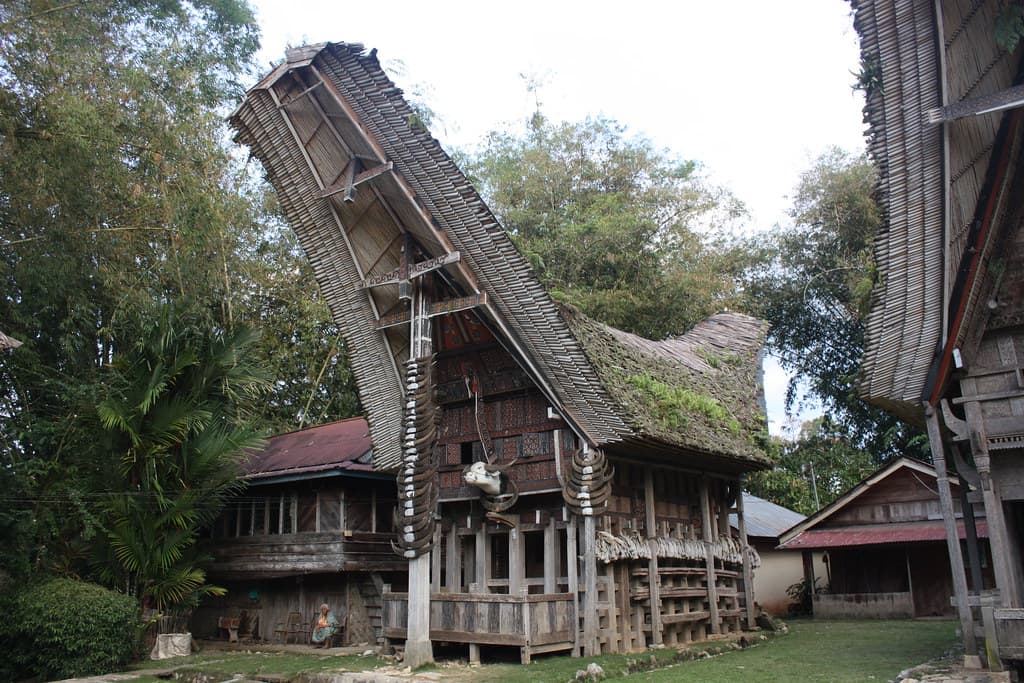
A multi-day funeral of processions, buffalo, and feasting that can take a family years to prepare.
Rambu Solo is the great Torajan funeral, and its scale is a measure of status and of love. The body may have rested in the family house for months or years while relatives save and assemble; when the rite finally comes it can run for days and draw hundreds of guests. Buffalo are central — a Torajan's wealth is counted in them, and the animals sacrificed at a funeral are understood to carry the soul to Puya, the land of the dead, and to be redistributed as meat through the community. The most prized are the tedong bonga, pied buffalo worth more than a house. There are processions, chanting, ma'badong dance circles, and the carving of tau-tau, wooden effigies that stand for the deceased at the cliff tombs. The whole event is also a vast act of reciprocity: families incur and repay debts of livestock across generations through who gives what at whose funeral. To outsiders the buffalo sacrifice can be hard to watch; within Aluk To Dolo it is the hinge on which the soul's journey turns, neither casual nor cruel. A funeral is the single largest thing most Torajan families will ever stage, and it binds the living to each other as much as to the dead.
Rédigées par la communauté hôte. Merci de les lire en entier avant de demander une invitation.
Strictly by invitation, arranged through a host who has a relationship with the family. A funeral is private grief; you attend as a received guest, never as a ticket-holder.
Black or dark, modest clothing covering shoulders and knees, as the family and Torajan guests wear. Bright colours are inappropriate at a death rite.
Restricted and consent-led. Ask the family — through your host — before photographing anyone, and never the bereaved in grief or the body. Many families permit images of the procession and not of the sacrifice or the mourners.
Present your gift, greet the family, sit where you are placed, and accept the hospitality offered. Do not wander, do not treat the sacrifice as spectacle, and leave when your host signals.
Torajan and Indonesian; an interpreting host is essential to navigate the etiquette.
Long hours seated in highland sun and occasional rain; nothing strenuous, but bring sun cover and a rain layer. The buffalo and pig sacrifices are unflinching and may be distressing — you will be forewarned.
Wear black or very dark, modest clothing — this is a funeral and dress is read closely. Bring a gift for the bereaved family on your host's guidance (sugar, cigarettes, or a contribution are customary). Sun and sudden mountain rain both arrive; a compact umbrella and a hat. Be ready to sit for hours.
You arrive as a guest of the family, usually bearing a gift, and you are received and seated among other guests in bamboo pavilions built for the occasion. There is chanting, the slow ma'badong circle, processions of relatives in black, and — at a point you will be warned of — the buffalo and pig sacrifices, which are direct and unhidden. Much of the day is hospitality: tea, cigarettes, conversation, the long patience of a big family event. It is solemn and social at once, and you follow your host's lead in everything.
The funeral feasts and ancestor-tending of the Toraja highlands