Peru· Americas
Jul 11 – Jul 12, 2026
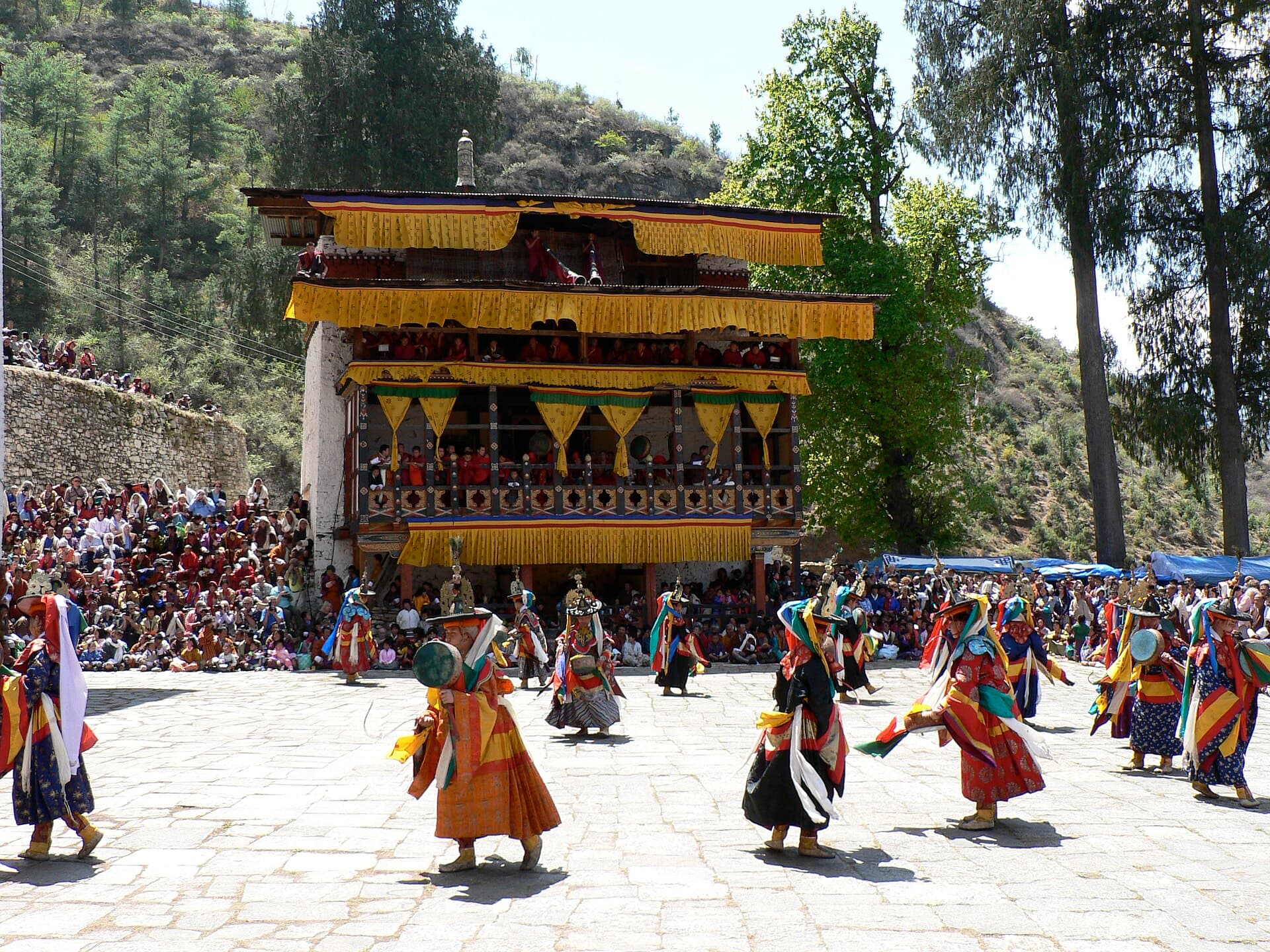
Monks in carved masks and brocade dance the deeds of Guru Rinpoche; on the last dawn a giant silk Buddha is unrolled.
Paro Tsechu unfolds over several days in spring in and around the Rinpung Dzong, the fortress-monastery above the Paro valley. The heart of it is the cham, sacred masked dances performed by monks and lay dancers in elaborate carved masks and brocade robes, each enacting an episode of Buddhist teaching — the subjugation of demons, the judgement of the dead, the deeds of Guru Rinpoche and the protective deities. To watch the cham is itself an act of devotion that confers blessing and merit; the dances purify the ground and the onlookers. Between them, the atsara — masked clowns — work the crowd with bawdy humour and keep order, a sanctioned irreverence woven into a solemn rite. The community comes in its finest, the women in the kira and the men in the gho, families spread on the dzong's flagstones for the day. The festival builds to its final morning, when before dawn the monks unfurl the Thongdrel — an immense applique scroll, some thirty metres across, depicting Guru Rinpoche — on the outer wall of the dzong; thongdrel means 'liberation on sight', and simply beholding it is held to cleanse sin. It is rolled away again before the sun can touch it. Tsechus renew the bond between the Buddhist teaching, the monastic body and the Bhutanese people, and the Paro festival is among the largest and most attended in the kingdom.
Drawn up by the host community. Please read in full before requesting an invitation.
Guided, as all visits to Bhutan are. The tsechu is open to visitors within the dzong's designated areas; your guide handles the daily levy, dress and protocol. Some inner rituals are reserved to the sangha.
Modest and covering: long sleeves and long trousers or skirt are required within the dzong, shoulders covered, hats removed indoors. Smart, sober dress honours the occasion.
Photography is generally allowed in the open courtyard, but flash is forbidden and some areas and the inner sanctums are off-limits. Ask before photographing monks and dancers up close, and follow every posted and spoken instruction.
Sit where directed, keep walkways clear for the dancers and processions, and stay silent and still during the Thongdrel. Walk clockwise around religious structures, never point your feet at the shrine or altar, and defer to the monks throughout.
Dzongkha; guides speak English.
Cold mornings and a pre-dawn start at altitude with warm afternoons; layer accordingly. Long periods seated on stone. Moderate altitude — acclimatise on arrival.
Bhutan requires visitors to travel on a guided package with a daily levy, so logistics are arranged; what you bring is for spring highland weather — warm layers for cold mornings and the pre-dawn Thongdrel, sun cover for bright days, and long sleeves and trousers, which are required inside the dzong. A hat to remove indoors, and ngultrum in cash for offerings.
You sit on the dzong courtyard's flagstones among Bhutanese families in their best dress and watch the cham unfold across the day — slow, deliberate, hypnotic turns of mask and brocade, the deep drone of horns and drums, the clowns darting through to tease the crowd. The colour and patience of it are total. On the final pre-dawn you join the hush as the Thongdrel is unrolled by lamplight, the whole valley come to receive its blessing before it is furled away at sunrise. You keep to the visitor areas and follow the monks' and your guide's lead throughout.
Masked dances of the Guru, beneath an unfurled silk Buddha