Cameroon· Africa
Dec 14 – Dec 15, 2026
Every two years the Bamoum put their Sultan on trial, unseat him, and re-install him once grievances are heard.
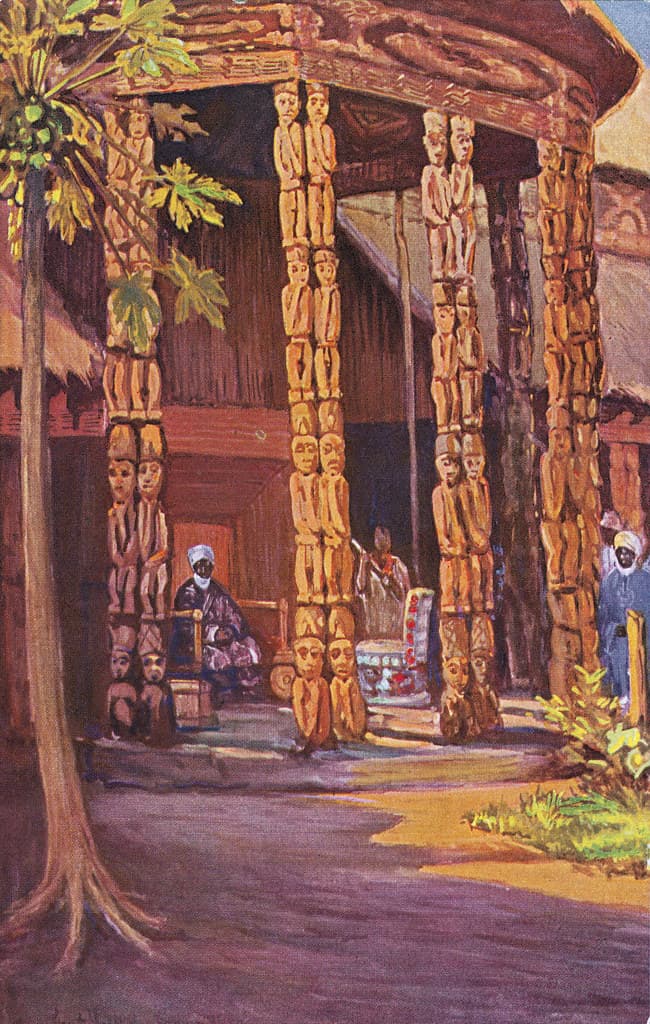
Nguon is the biennial festival of the Bamoum, and its central rite is unlike any other royal ceremony in the catalogue. Over its days the Sultan is brought before his people and symbolically judged: charges are laid, the people air their grievances against the year's governance, the Sultan is made to step down from his throne and withdraw, and he is re-installed only after the accounting is complete and he is, in effect, re-chosen. It is a built-in check on royal power, performed in public, that the Bamoum trace back more than six hundred years to the kingdom's founding — older than the court's adoption of Islam, and often described as a forerunner of the participatory politics the modern world claims as its own invention. Around this core run the full resources of one of Central Africa's great courts: parades of the Sultan and his notables, horsemen and mock battles, royal music and dance, the masked societies, and a major market and craft fair drawing on Foumban's famous bronze-casting, beadwork and weaving. The festival is held at the palace — among the oldest continuously occupied royal residences in Africa — and is staged every two years by decision of the Sultan; the kingdom has pursued UNESCO recognition for it. For a visitor, Nguon offers a rare thing: not just the pageantry of an old court, but the public performance of its political philosophy, in which the king is answerable to the people who make him.
Drawn up by the host community. Please read in full before requesting an invitation.
Guided, every two years when the Sultan calls the festival. The public processions, trial sequence and market are open to visitors via a local host; the inner palace rites are reserved. Confirm the edition is being held and check regional conditions.
Modest, respectful clothing for a royal and largely Muslim court; covering shoulders and knees. Smart-modest reads as respect at the palace.
Restricted. The public processions and market are generally open to photography, but ask before photographing the Sultan, notables and masked societies, and follow palace direction at the trial rites.
Show deference to the Sultan and notables, keep to the public areas and the market, and let processions and masked figures pass without interference. Buy directly from Foumban's artisans, and follow your guide on what is open.
Shüpamem (Bamoum) and French; English-speaking guides can be arranged.
Warm, dry plateau days over long hours; manage sun and water. As with the Nso' entry, the regional situation in Cameroon matters more than terrain — take current advice. Malaria precautions for travel.
Foumban in December is warm and mostly dry — light clothing, a hat, sunscreen and water, with a light layer for cooler evenings on the plateau. Cash in Central African CFA francs for the market and guides. Modest dress for a royal and largely Muslim setting. Confirm regional travel conditions before going.
Foumban fills around the palace: processions of the Sultan and notables in heavy robes, horsemen, drumming and masked figures, and a large craft market thick with Bamoum bronze, beadwork and brass. The heart of it is the trial sequence — formal, deliberate, weighty — when the Sultan is judged and withdraws before being restored. You follow the public programme and the market; the innermost palace rites have their own access. It is hot, ceremonious and dense with history, and a guide is essential to read what is unfolding.
A six-century court ritual where the people judge the king