Nepal· Asia
Oct 10 – Oct 11, 2026
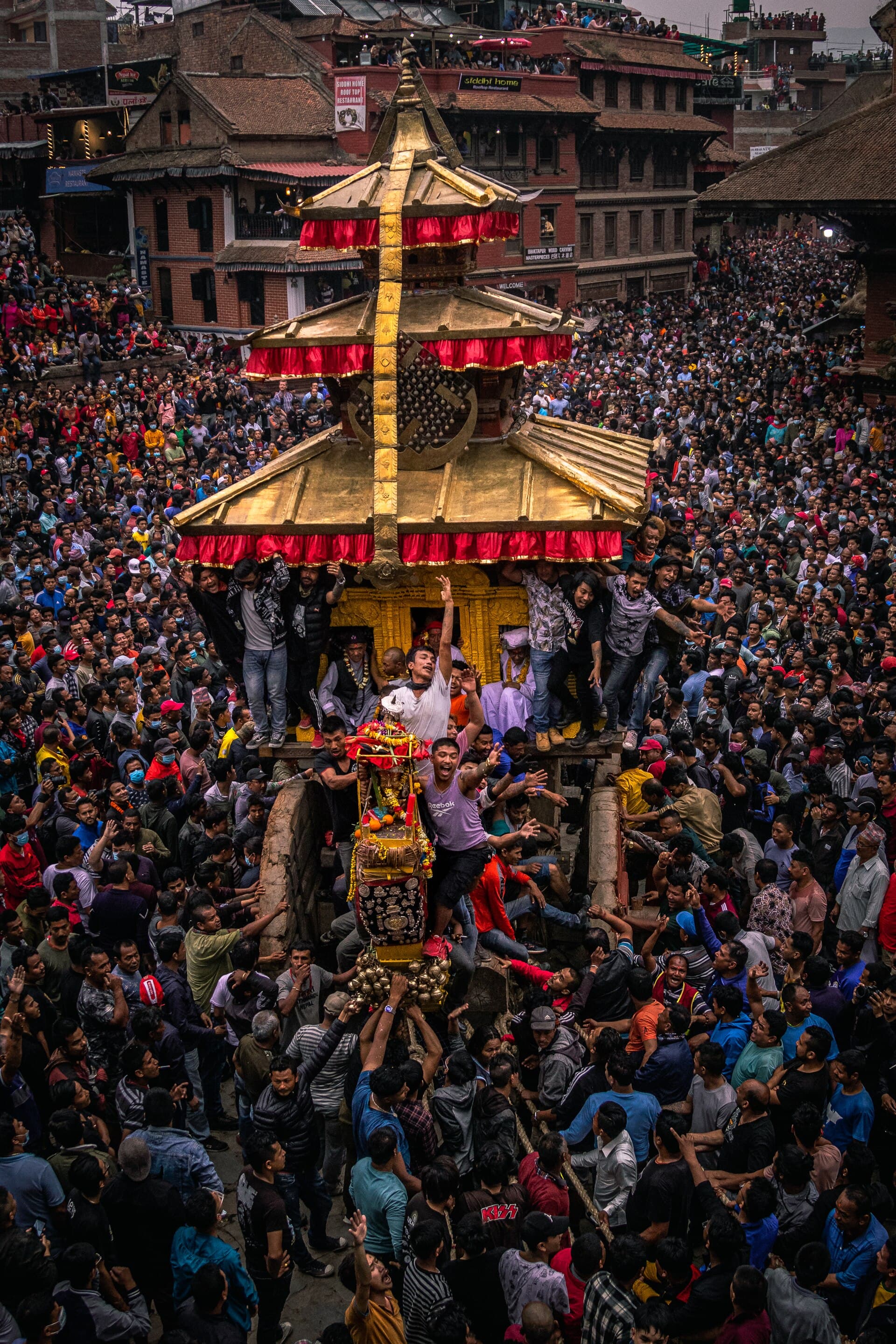
A three-storey chariot of Bhairava is hauled through Bhaktapur in a tug-of-war between the upper and lower town.
Bisket Jatra is Bhaktapur's nine-day new-year festival, one of the few Nepali festivals fixed to the solar rather than the lunar calendar, climaxing around 14 April, the start of the year in the Bikram Sambat reckoning. A massive, three-storeyed wooden chariot is built without nails to carry the image of Akash Bhairava, a fierce form of Shiva, and a second carries the goddess Bhadrakali. The chariots are hauled through the narrow streets and squares of Bhaktapur by huge crowds heaving on thick ropes, and the festival turns on a ritual tug-of-war at Taumadhi Square between the eastern (upper) and western (lower) halves of the town, each pulling the chariot toward its own quarter — a contest that can turn rough and is meant to. At Lyasinkhel a great wooden pole, the lingo, is raised and then, on new year's day, pulled down in the Satruhanta ritual, an act tied to a myth of two serpents slain to free the town from a curse. The festival blends tantric symbolism, the rivalry of neighbourhoods, and the renewal of the year in a single sustained public effort. It is among the most physically charged festivals in the valley, owned and run by Bhaktapur's guthi and pulled by its people, with visitors watching from the edges of a genuinely intense crowd.
Drawn up by the host community. Please read in full before requesting an invitation.
Open. The festival fills Bhaktapur's public squares and streets, free to all; the old city charges a heritage entry fee for foreign visitors. Watch from square edges or balconies — the chariot and ropes are hazardous.
Modest clothing covering shoulders and knees for the temple squares. Practical and secure for heavy crowds.
Photography is welcomed throughout the public festival. Keep out of the chariot's path to shoot, and ask before close portraits, especially of priests at the rituals.
Stay clear of the pulling ropes and the chariot's swaying path — the tug-of-war is forceful and people are injured most years. Don't climb the chariots or touch the deities, mind your footing in the crush, and follow the crowd marshals.
Nepal Bhasa (Newari) and Nepali; English in Bhaktapur's tourism.
Dense, forceful crowds around a heavy moving chariot — the main risk is crush and the chariot itself; keep back and keep your footing. Pre-monsoon heat and humidity; manage water.
Mid-April in the valley is warm and can be wet — light clothing, a hat, sunscreen and water, with a light rain layer. The crowds are dense and the chariot dangerous; wear sturdy closed shoes and keep valuables secure. Nepali rupees in cash. Modest dress for temple squares.
Bhaktapur's medieval squares fill to bursting; the chariot looms above the crowd, swaying as hundreds heave on the ropes and the two halves of the town fight to drag it their way. It is loud, pressing and unpredictable — the chariot can lurch, ropes can snap, the crowd surges. From a balcony or a square's edge you watch a whole town pulling together and against itself at once. The raising and felling of the lingo pole is the other great set-piece. Keep well back from the ropes and the chariot's path.
The chariot festivals of the valley's old city-states