Nigeria· Africa
Sep 1 – Sep 2, 2026
At a whistle, thousands wade into the Matan Fada and the river boils with fishermen.
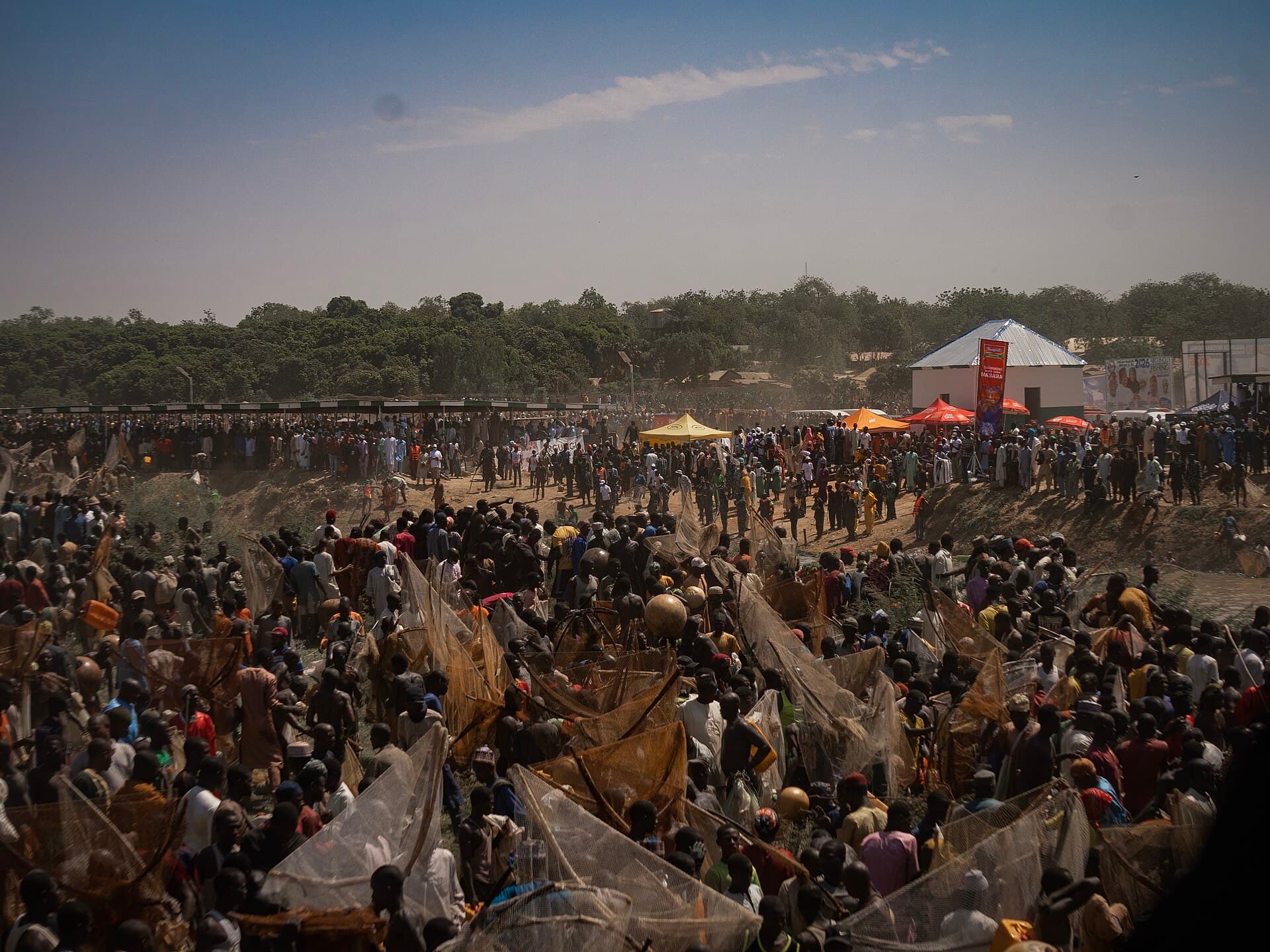
The Argungu fishing festival ends on its most famous hour: thousands of fishermen line a stretch of the Matan Fada River that has been protected from fishing for the season, and at a single whistle they all enter the water at once. For about an hour the river churns as men work with hand-nets, calabash gourds for buoyancy and trapping, and often nothing but their hands, racing to wrestle out the largest fish before the time is up. The winning catch can be enormous — well over forty kilograms — and the prize and prestige are substantial. The festival began in 1934 as a gesture of unity when the Sultan of Sokoto visited Kebbi, turning a long enmity into a shared celebration, and it has run intermittently since, suspended in some years for security and water-level reasons and revived again. Around the river the wider festival fills several days: Kabbawa wrestling and boxing, canoe regattas, swimming and diving contests, wild-duck hunting, agricultural shows, and a durbar in which richly turned-out horsemen pay homage to the Emir of Argungu. It is at once a fishermen's contest, a harvest of the river, and a north-western Nigerian statement of cultural identity that now draws competitors from Niger, Chad and Togo.
Drawn up by the host community. Please read in full before requesting an invitation.
Open festival; the riverbank is public and the events are ticketed in parts. Reached via Sokoto or Birnin Kebbi. Confirm the current year's status and security advisories before travelling.
Modest, covering clothing in keeping with a conservative Muslim region; women should cover shoulders, arms and knees and may carry a head scarf. Light colours for the heat.
Photography of the fishing and public events is welcomed. Ask before photographing individuals, particularly women, and follow officials' directions near the Emir's durbar.
Watch the fishing from the designated banks and don't enter the protected river stretch. Show deference at the durbar and to the Emir's party. Respect prayer times and local customs around alcohol and dress.
Hausa; English is Nigeria's official language and widely used at the festival.
Strong dry-season heat and dust over long crowded days; pace water and salts and protect against the sun. Carry personal medication; this is a malaria-endemic region — take prophylaxis and repellent.
Dry-season Sahel heat: a hat, high-SPF sunscreen and plenty of water are essential, and a dust scarf helps in the crowds. Bring Nigerian naira in cash. Dress modestly for a conservative, predominantly Muslim region. Sun cover and a folding stool make the long riverbank wait easier.
From the bank you see the lined-up fishermen tense at the water's edge, then the whistle and a single surge as the whole crowd plunges in. The water disappears under bodies, nets and upturned gourds; men hoist thrashing fish overhead; officials wade among them weighing the giants. It is fast, chaotic and joyful, over in around an hour. The surrounding days are a fairground of horsemen, wrestlers and drummers — colour, dust, crowds and heat, with the Emir's durbar as the formal heart.
A river taken by hand, at a single whistle