尼泊尔· Asia
Apr 30 – May 1, 2027
Kathmandu honours the rain god and parades the Kumari, the valley's living goddess, through the old royal square.
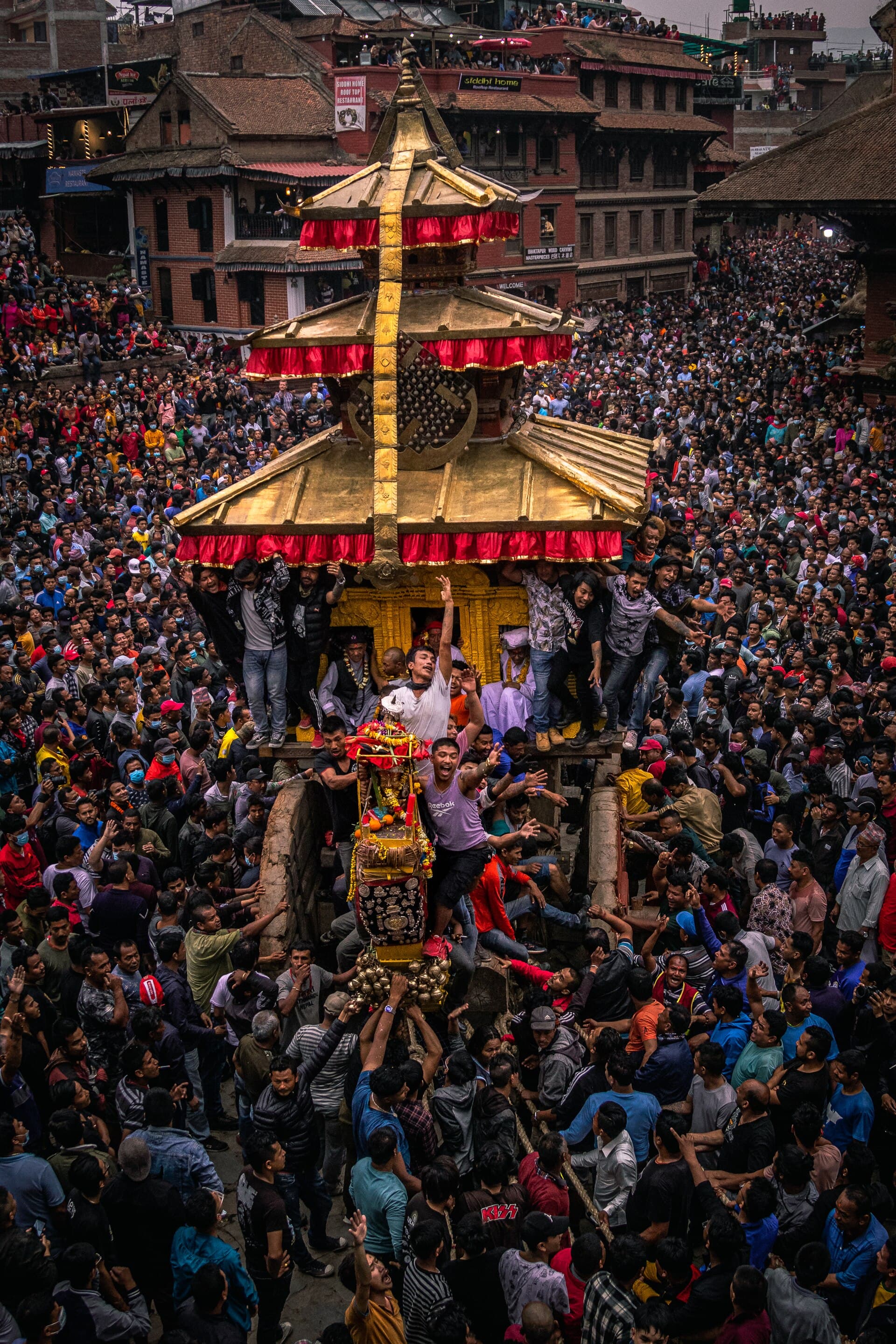
Indra Jatra, known to Newars as Yenya, is Kathmandu's great eight-day festival marking the end of the monsoon and the coming harvest, held around the September full moon. It opens with the raising of a tall ceremonial pole, the lingo, before the old royal palace at Hanuman Dhoka, and fills the squares of the old city with masked dances, the display of the great mask of Akash Bhairava, processions of deities, and the lakhey — a fanged demon-dancer who careers through the streets. Its most famous moment is the chariot procession of the Kumari, the living goddess: a young girl from the Buddhist Shakya community, selected as a small child and revered as the embodiment of the goddess Taleju, who is brought out of her house — one of the few times she appears in public — and pulled through the city in a wooden chariot, flanked by chariots of Ganesh and Bhairava. Crowds press to glimpse her and receive her blessing. The festival commemorates the rain god Indra, whose mother, the legend says, came down to the valley seeking a flower and whose captured son the people once bound — and it weaves that myth into a civic celebration that historically renewed the king's mandate through the Kumari's blessing. It is Kathmandu's defining public festival, run by the Newar community in the heart of a UNESCO-listed square.
由主办社区拟定。请在请求邀请前完整阅读。
Open. The festival takes over Kathmandu's public streets and Durbar Square with no ticket, though the square carries a heritage entry fee for foreign visitors. Watch from edges and steps in a heavy crowd.
Modest clothing covering shoulders and knees for the temple squares; practical and secure for crowds.
Photography of the festival is welcomed. Photographing the Kumari is restricted and at times forbidden — never use flash toward her and follow the attendants' direction; ask before close portraits of priests and masked dancers.
Keep clear of the Kumari's chariot path and the pulling ropes, never point at or photograph the goddess against instruction, and don't touch the masked dancers. Mind your footing and belongings in the crush and follow the marshals.
Nepal Bhasa (Newari) and Nepali; English in Kathmandu's tourism.
Heavy monsoon-end crowds and slick streets; the main risks are crush and footing. Warm, humid weather with rain — manage water and keep dry.
Late September is the tail of the monsoon — warm, humid and shower-prone: light clothing, a compact umbrella or rain layer, and water. The crowds are heavy; sturdy closed shoes and secure valuables. Nepali rupees in cash, and modest dress for the temple squares.
Kathmandu Durbar Square becomes a sea of people beneath the raised lingo pole. Masked dancers and the snapping jaws of the lakhey weave through the crowd; the huge silver-eyed mask of Bhairava is unveiled and, on some nights, rice beer is poured from its mouth to the scrambling crowd. The high point is the Kumari's chariot, hauled slowly through the press as everyone strains for a sight of the child goddess. It is dense, devotional and joyous, and you watch from the square's edges and temple steps among the crowd.