Pérou· Americas
Jul 11 – Jul 12, 2026
A High Atlas market-shrine where the divorced and widowed may choose to marry anew.
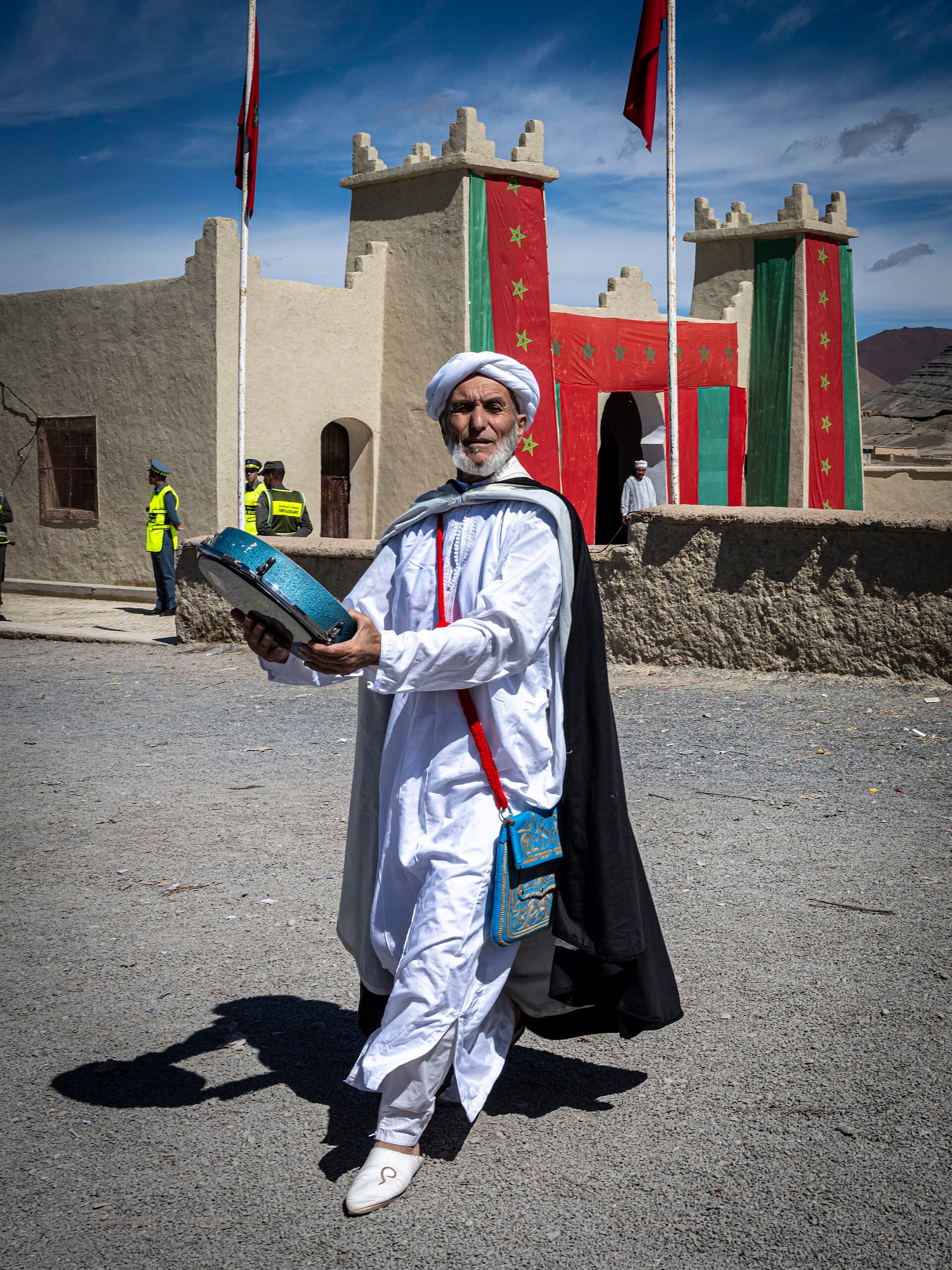
The Imilchil moussem is, at heart, a saint's-festival market on a remote Atlas plateau, held each September around the shrine of Sidi Ahmed Oulmghani. What makes it singular is the marriage custom attached to it: among the Aït Haddidou it has long been an occasion at which men and women who are widowed or divorced — and, by tradition, with a measure of choice not always granted at a first marriage — may meet, agree to a match, and have a betrothal recorded before the adoul, the religious notaries. Women attend in the distinctive striped handira capes and pointed head-dress, their faces marked with patterns; families gather and negotiate; agreements once made are formalised in the days that follow. Around the marriages the moussem is a full mountain fair — livestock and carpets traded, tents pitched in their hundreds, Amazigh music and the ahidous communal dance through the evenings, and displays of horsemanship. The gathering matters because the Aït Haddidou are scattered across hard high country for most of the year; the moussem is when the community concentrates, settles its commerce, renews its bonds and arranges its futures. It has also been strained by tourism, with the 'marriage festival' billing sometimes overplaying or staging the betrothals for outsiders — a tension the community itself has voiced. A visitor comes best as a guest of the market and the music, not a spectator of other people's marriages.
Rédigées par la communauté hôte. Merci de les lire en entier avant de demander une invitation.
Guided access via a host who knows the plateau and the community; the drive in from Midelt or the Dadès is long and rough. The moussem's dates shift with the agricultural and religious calendar — confirm before travelling.
Modest, covering clothing for a conservative Amazigh Muslim community; warm layers for the altitude. Women cover shoulders and knees; a head scarf is useful.
Sensitive. The market, music and horsemanship are generally fine to photograph with courtesy, but the betrothal families and many women will not wish to be photographed — always ask first and accept no. Do not turn a marriage into a photo opportunity.
Engage with the market and the music as a guest; keep a respectful distance from the betrothal proceedings, which are private family business. Buy from the traders, accept tea, and don't press for access to the marriages.
Tamazight (Central Atlas); Moroccan Arabic and some French regionally. A local interpreter is valuable.
High altitude with strong UV by day and near-freezing nights; bring sun protection and serious warm layers. The access road is long and rough and facilities are minimal — carry water, medication and a first-aid kit.
September at 2,200 m means warm days and genuinely cold nights — layer up and bring a proper warm jacket for the evenings. There is no infrastructure beyond tents; bring cash in dirham, water, sun protection for the high-altitude glare, and dust cover. Modest dress for a conservative rural Muslim community.
You arrive on a high, bare plateau covered in white tents and animals, cold at the edges of the day and bright at noon. The market is the bulk of it — wool, carpets, dates, livestock, household goods — threaded with music and, in the evenings, long lines of the ahidous dance. Women in striped capes and silver, men in white djellabas; horsemen at the fantasia. The betrothals themselves are family matters conducted away from the crowds, not a staged ceremony; what you mostly witness is the gathering that surrounds them.
The High Atlas betrothal gathering of the Aït Haddidou