Pérou· Americas
Jul 11 – Jul 12, 2026
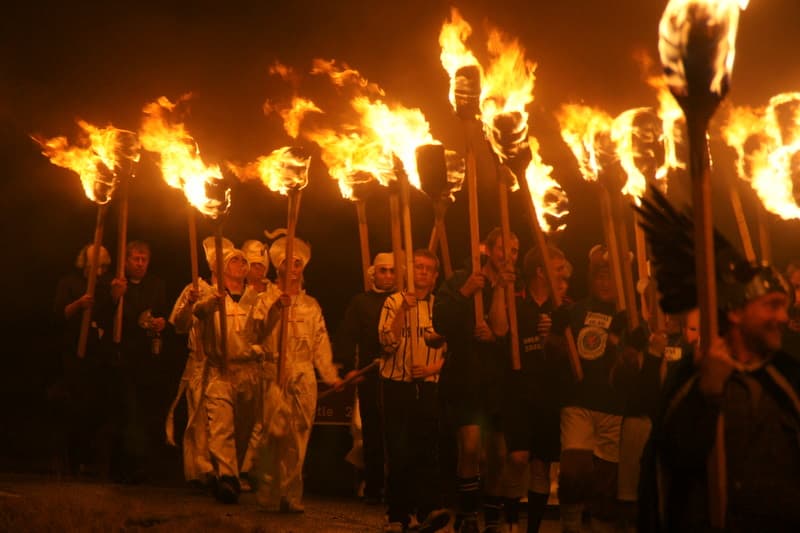
Nearly a thousand torch-bearers march a hand-built Viking galley through Lerwick and set it ablaze.
Up Helly Aa is the largest of a string of fire festivals held across Shetland through the dark of winter, and the Lerwick one, on the last Tuesday of January, is the best known. It is the work of a whole year: the squads design and make their costumes in secret, and a team builds a full-size replica Viking longship, the galley, for the single purpose of burning it. The day begins with the Guizer Jarl — the festival's elected leader — and his Jarl Squad parading in full Viking dress, winged or raven helmets, axes, shields and mail, and showing the galley through the town. After dark, up to a thousand guizers in their squad costumes assemble in the blacked-out streets, light tar torches, and march in long ranks behind the galley to the burning site, the column of fire winding through the winter night. At the site they circle the ship, a song is sung, and on a signal the torches are hurled into the galley until it is a roaring blaze. Then the squads disperse to the halls, where through the night they perform their acts in turn for the host communities. The festival is a nineteenth-century construction rather than an ancient Norse rite, but it is a genuine and fiercely held expression of Shetland identity and its Scandinavian inheritance — and a way of making light and warmth and common purpose at the bleakest point of the northern year. The public procession and burning are everyone's; the all-night hall parties are Shetland's own.
Rédigées par la communauté hôte. Merci de les lire en entier avant de demander une invitation.
Open and free for the daytime parade, the evening torch procession and the galley burning. The all-night hall parties are private, ticketed events for the Shetland community and their invited guests — not generally open to visitors. Book travel and lodging months ahead.
Heavy winter waterproofs for standing outdoors at night. No code for spectators; the guizers wear the costumes.
Photography of the procession and burning is welcomed. Mind the open flame and the crowd, don't impede the marching squads, and keep a sensible distance from the torches and the galley.
Stay behind the marshals' lines, keep clear of the torch-bearers and the burning galley, and don't expect entry to the halls unless invited. Treat it as the community's night that you are welcome to watch.
English and the Shetland dialect.
Cold, wet, windy winter night around open flame and a large crowd; dress for it, keep clear of the fire, and watch footing in the dark. Few hours of daylight.
A Shetland January night is cold, wet and often fiercely windy: properly warm, waterproof and windproof layers, hat, gloves and warm waterproof boots are essential. It is dark and crowded near open flame — keep children close and stay behind the marshals' lines. Sterling in cash; book accommodation and the ferry or flight far ahead, as the island fills.
By late afternoon Lerwick is dark and the town is keyed up; the Jarl Squad in their Viking kit are out among the crowds with the galley. After nightfall the streetlights go out and the squads form up — rank after rank of costumed figures, torches flaring — and the burning river of fire moves off behind the ship. At the site the thousand torches ring the galley, a hush, a song, then the throw, and the longship goes up in a wall of flame against the winter sky. It is cold, smoky, loud and communal. The procession and burning are free to watch; the halls afterward are private to Shetland.
A thousand torches and a burning galley in the Shetland dark