Pérou· Americas
Jul 11 – Jul 12, 2026
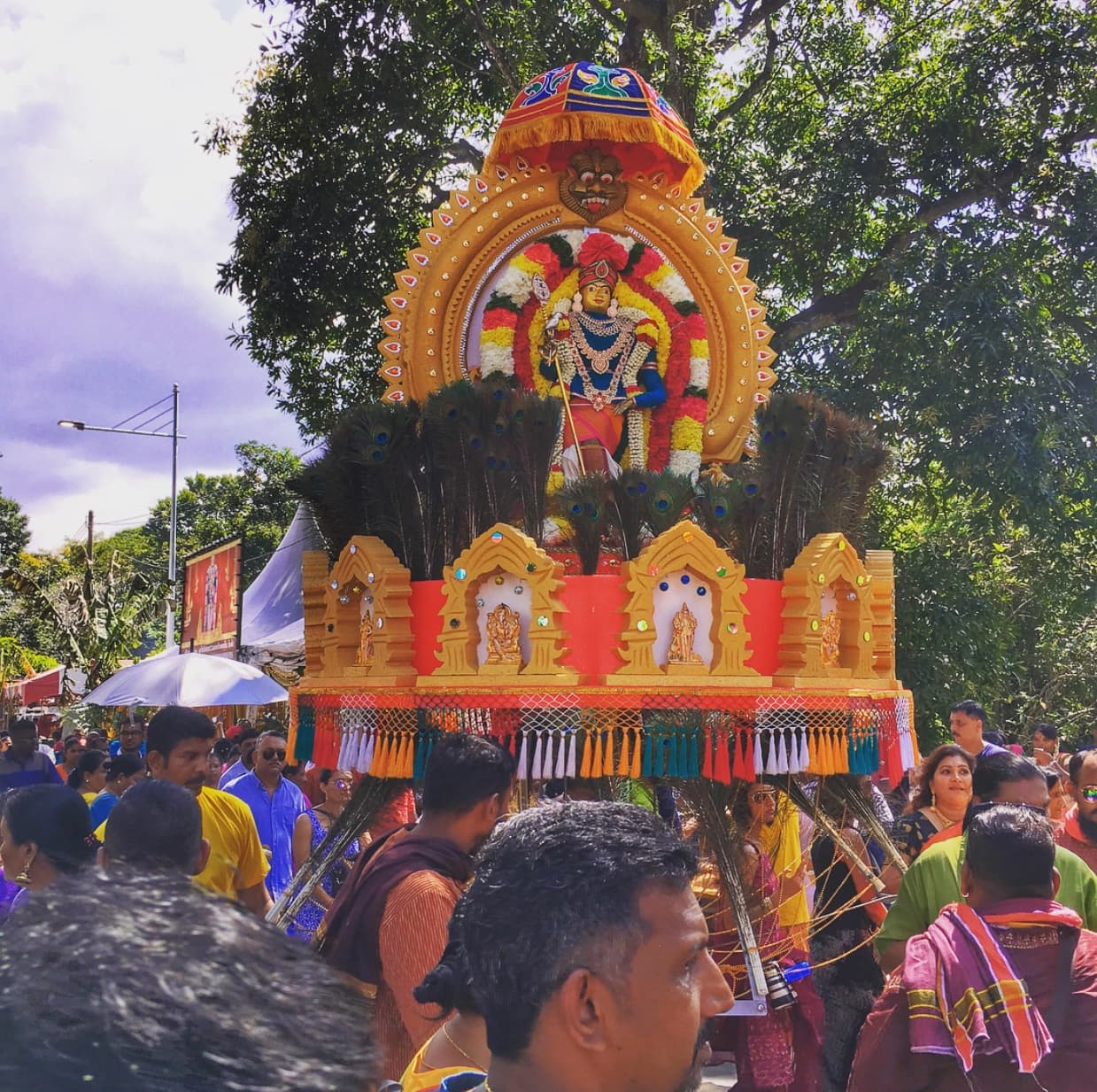
Devotees carry kavadi pierced through the skin up 272 steps to the cave shrine of Murugan.
Thaipusam at Batu Caves is the largest gathering of its kind outside India, drawing well over a million people to a limestone hill north of Kuala Lumpur whose great cave temple sits at the top of 272 steps. The festival repays vows made to Lord Murugan: a devotee who has asked the god for help — recovery from illness, a child, deliverance from trouble — pledges a kavadi, and on Thaipusam carries it to the shrine. The simplest is the paal kudam, a pot of milk borne on the head; the most demanding are the great steel-and-peacock-feather frames, the vel kavadi, fixed to the bearer's body by hooks and by skewers and spears — the vel — driven through the cheeks, tongue and skin. The bearers prepare with weeks of fasting, celibacy and prayer, and carry their burden in a trance sustained by drumming and the chanting of their families and friends, who surround and steady them across the long walk and up the steps. Many feel no pain and bleed little, a state devotees attribute to Murugan's grace. The procession begins before dawn and continues for a day and a night. It is an overwhelming public act of faith and gratitude — endurance offered as devotion — and the community receives the bearers' vows as the whole point of the day. The piercings and the burdens are sacred undertakings, not spectacle.
Rédigées par la communauté hôte. Merci de les lire en entier avant de demander une invitation.
Open to all, free. Batu Caves is reached by train (KTM Komuter) or road from Kuala Lumpur; expect immense crowds and go before dawn. The shrine is at the top of 272 steps.
Modest clothing covering shoulders and knees for the temple; shoes are removed at the cave shrine. Light fabrics for the heat.
Photography is widespread and accepted, but the kavadi bearers are in a sacred trance of penance — keep a respectful distance, don't block their path or use flash in their faces, and ask before close portraits. Never treat the piercings as a curiosity.
Give way to the bearers and their supporting families at all times, keep clear of their path on the steps, and lower the tone of any spectating. Remove shoes at the shrine, dress modestly, and move with the devotion rather than against it.
Tamil and Malay; English is widely spoken in Kuala Lumpur.
Extreme crowds, tropical heat and a 272-step climb from before dawn — pace water, mind heat exhaustion, and watch your footing in the press. Those uneasy with the sight of piercing and blood should be prepared.
Tropical Malaysian heat and enormous crowds from before dawn: light breathable clothing, a hat, high-SPF sunscreen and plenty of water. Sturdy shoes for the 272 steps, which you climb barefoot or in socks at the top out of respect. Malaysian ringgit in cash, and modest dress for a temple. Go very early to beat the crush and heat.
From before dawn the road to Batu Caves is a slow river of devotees, drummers and families, the air thick with incense, camphor and chanting. Bearers move in clusters, the great kavadi swaying above them, cheeks and backs pierced with vel and hooks, eyes fixed and distant; their kin dance backwards before them, beating time and steadying the frame. The climb up the 272 steps under the burden is the climax. It is intense, loud, crowded and confronting; you keep to the side, let the bearers pass, and watch a vow being kept.
A vow of penance up 272 steps to the cave shrine