Indonesia· Asia
Jul 15 – Jul 16, 2026
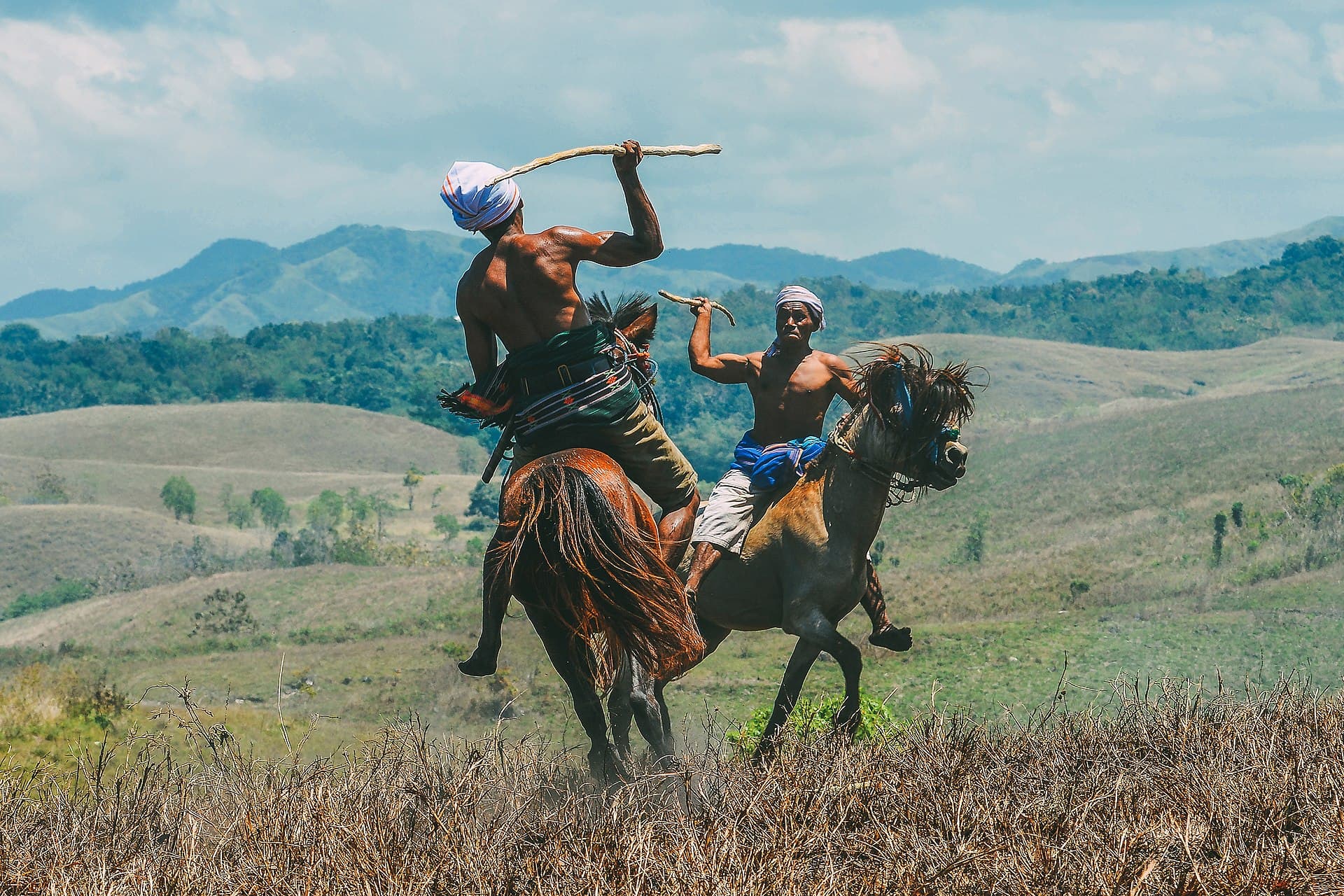
Two sides of horsemen ride at each other throwing blunted spears; blood spilled on the field is said to bless the rice.
Pasola opens on the beach before dawn. When the ratu judge that the nyale sea-worms have swarmed — usually in February or March, eight days after a full moon — the worms are gathered and read for the year's fortune, and only then is the Pasola called. On the field, two teams of horsemen from opposing villages charge and hurl wooden spears at one another at a gallop. The spears are now blunted by government order, but the danger is real and injuries still happen; that is the point, not an accident of it. The Marapu hold that blood spilled on the ground fertilises the coming rice crop, so the contest is an offering as much as a game. It runs across several west Sumbanese districts in turn — Lamboya and Kodi early, Wanokaka and Gaura after — each tied to its own nyale beach. For the communities it is a settling of the cosmic accounts before planting: the ancestors are present, the harvest is petitioned, and the rivalry between villages is discharged in a controlled, sanctioned form. It is one of the few places where a pre-Hindu, pre-Islamic, pre-Christian agricultural rite still governs a real planting calendar.
Drawn up by the host community. Please read in full before requesting an invitation.
Witnessed access through a local host who knows which district's Pasola is running and can position you safely. The preliminary beach and Marapu rites are largely private; your host will explain what you may and may not approach.
Modest, covering clothing; a Sumbanese ikat cloth at the waist is a respected gesture if your host provides one. Practical for an early start and a dusty field.
Photography of the public Pasola charge is generally fine; the dawn beach gathering of the nyale and the priests' rites are sacred and often closed — ask your host before raising a camera there.
Stay well behind the lines the marshals set; the spears are thrown in earnest. Treat the ratu and the omen-reading with silence, and do not treat injury on the field as entertainment — it is understood as the offering working.
Sumbanese languages and Indonesian; bring an interpreter for the ritual context.
The field is hazardous — errant spears and bolting ponies cause real injuries to spectators who crowd in. Keep your distance. Humid heat and an early start; mind dehydration. Rural Sumba has limited medical care.
An early start in the dark, then full tropical sun by mid-morning: a head torch, sun protection and water cover the basics. Footing on the field edge is dusty or muddy depending on the rains — closed shoes. Keep cameras and bodies back from the charging lines; spears go astray.
The day starts in the dark at a nyale beach, where priests wade out to collect the worms while villagers wait. The Pasola itself is on open ground later in the morning: horsemen in headcloths, small fast ponies, and a charge that closes the distance frighteningly quickly before the spears fly. The crowd presses the edges of the field and surges back when a run comes near. It is loud, fast and genuinely dangerous; you keep well back. Between charges there is a lot of waiting, posturing and reading of omens.
The spear-throwing harvest rite of west Sumba